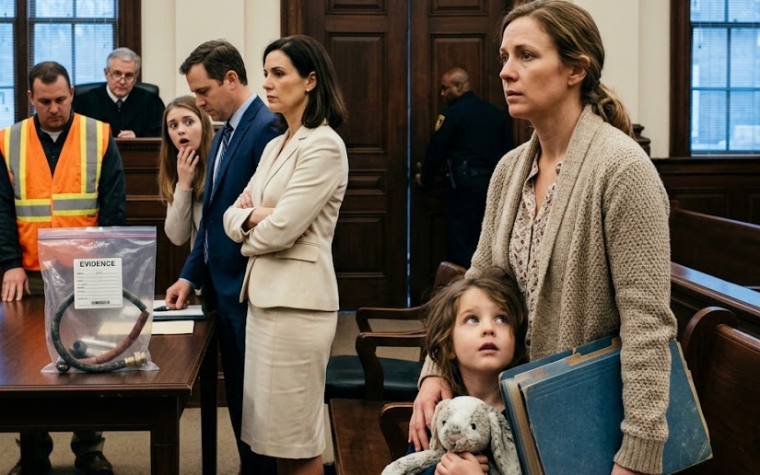
Richard approached me while Emily and Daniel waited nearby.
“You’ve made me look like a criminal,” he said.
“No,” I replied.
“The documents showed what you did.”
“You could have called me before involving solicitors.”
“You called me first.
You told me not to touch my own money.”
His mouth tightened.
“I suppose the children hate me now.”
“That is between you and them.”
He looked at the envelope under my arm.
“You would have had nothing without me.”
Five years earlier, that sentence would have cut through me.
Now I understood that the money had come from a life we built together, a pension funded during decades when I raised our children, managed our home and made it possible for him to work the way he did.
“I had more than you allowed me to know,” I said.
Then I walked towards the lift.
This time, he was the one left standing in the corridor.
I used part of the money to move into a small ground-floor flat with dry walls, secure windows and a radiator that worked without knocking.
I paid for my treatment.
I filled the kitchen cupboards before buying anything decorative.
Emily took me shopping for new shoes.
Daniel replaced my cracked kettle and claimed the old one was a fire hazard, though we both knew he simply wanted to give me something.
The pension transfer gave me a stable income.
The bank compensation covered the interest I had lost.
I placed most of the original account balance into savings after meeting an independent adviser who explained every page slowly and never once told me to sign before I was ready.
I kept Richard’s old card for several months.
At first, it remained in the shoebox with the court papers.
Then one Sunday, I took it out and placed it on my kitchen table.
It no longer looked powerful.
It was only expired plastic carrying the fingerprints of a frightened woman who had once believed accepting help would prove her husband right about her.
I cut it through the middle with a pair of kitchen scissors.
The money did not return the years I spent cold, hungry or ashamed.
It did not erase the court corridor or change the man Richard had chosen to become.
What it restored was simpler.
I could answer the doctor honestly.
I could invite my children to dinner without counting slices of bread.
I could turn on the heating before my hands went numb.
I could open a letter without feeling my heart race.
Most importantly, I stopped calling survival stubbornness.
Richard believed the card would remind me that he had rescued me for a few months.
Instead, it proved that I had survived five years without his permission—and that what he called charity had belonged to me all along.