That made Daniel angrier.
‘Rachel,’ he said, lowering his voice, ‘do not do this while I am on duty.’
I looked at the phone.
‘You did this while I was in a hospital bed.’
The nurse looked away, but I saw her mouth tighten.
Daniel tried another angle.
‘You are emotional.
You just gave birth.’
‘I know exactly what I am,’ I said.
‘I am her mother.’
He hung up.
The room seemed larger after his voice disappeared.
The records clerk finished what she could.
The nurse checked my daughter’s temperature with hands so gentle I almost cried from that alone.
Before she left, she paused beside my bed.
‘What he said yesterday,’ she told me, ‘I can write it down if you need me to.’
I nodded once, because if I spoke, I would break.
By noon, Maya had filed the first papers.
Not revenge.
Not punishment.
Protection.
Paternity.
Support.
Medical coverage.
A preservation request for messages and financial records.
A notice that Daniel was not to intimidate me through calls or command pressure or family threats.
Daniel had expected a crying wife.
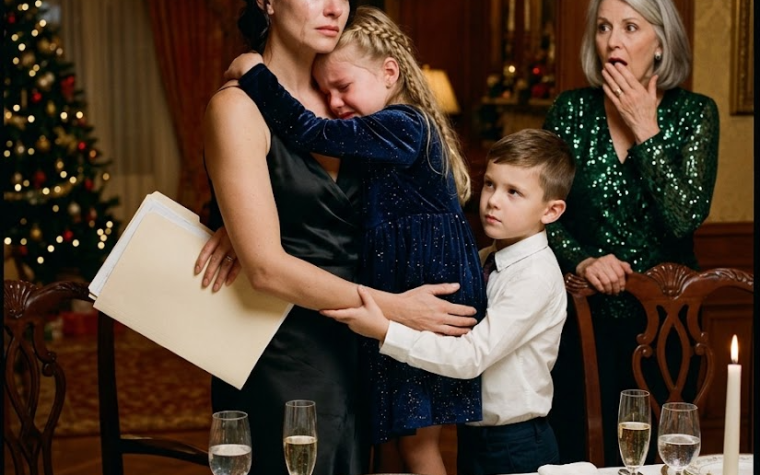
He had not prepared for a mother with a folder.
His first mistake was thinking silence meant weakness.
His second was calling my mother.
She arrived at the hospital that evening with no makeup, flat shoes, and the kind of calm that only women who have survived worse can carry.
Daniel had told her I was trying to ruin his military career because he had finally been honest.
He said I was unstable.
He said the baby might not even be his.
My mother listened to him, drove to the hospital, and asked for the folder before she asked to hold the baby.
When she finished reading, she put the papers back in order.
Then she took my daughter into her arms and whispered, ‘Your father picked the wrong day to underestimate your mother.’
I did cry then.
Not loudly.
Not the way people imagine betrayal looks.
Just silent tears running down my face while my mother rocked the child Daniel would not touch.
Two days later, I left the hospital with my daughter in the back seat and the blue folder on the passenger seat.
I had named her Elise.
I had chosen the name before delivery, when I still believed Daniel would say it first with wonder in his voice.
He did not say her name until the temporary hearing three weeks later.
By then, his lawyer had taught him to look wounded.
Daniel arrived in dress uniform.
It was a performance, polished shoes and lowered eyes, the kind of appearance meant to make strangers see duty before deception.
He sat across from me in the courthouse as if he were the reasonable one.
His lawyer said Daniel had been overwhelmed.
He said marriages sometimes fail before children arrive.
He said Daniel wanted privacy for everyone involved.
Privacy.
That word almost made me laugh.
There had been no privacy when he rejected Elise in front of a nurse.
No privacy when he threatened me on speaker while hospital staff stood beside my bed.