Some apologized.
Some avoided the subject.
Mira barely looked at me.
I didn’t demand confessions.
I had learned something important about public humiliation: the people who join it often become extremely quiet when the balance of power changes.
That silence no longer frightened me.
After dinner, Uncle Raymond handed me a small velvet pouch.
For one irrational second, my body tensed.
Then he smiled sadly.
“Your grandmother gave me this years ago and told me to give it to you when you finally understood her.”
Inside was an old brass key.
Not to the mansion.
To the small writing desk she had kept in her study.
When I opened it later, I found letters, photographs, and one note in her handwriting.
She hadn’t predicted Celeste’s bracelet.
She hadn’t predicted the slap.
But she had known my father better than I had wanted to.
Her note was short.
Power reveals character.
So does having none.
I sat alone in her study for a long time after reading it.
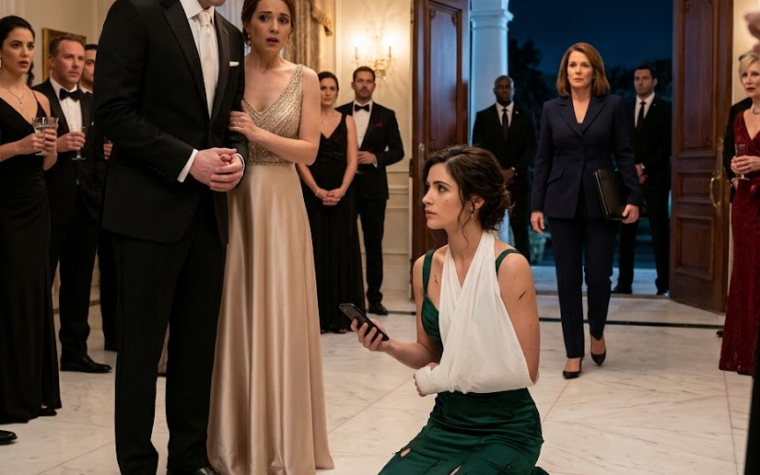
Months earlier, two hundred people had watched my father strike me and demand that I kneel.
For a few seconds, standing beneath those chandeliers with my cheek burning, I had felt completely powerless.
But the strongest thing I did that night was not shout back.
I walked away.
I made one phone call.
And when the truth finally entered that house the next morning carrying a leather folder and a court order, nobody could laugh it away.