Two brown pigtails.
A familiar serious face.
Emma.
Her father spotted Clare almost at the same time.
Recognition spread across his expression.
Emma followed his gaze.
Her eyes widened.
“Princess!”
Half the café turned.
Months earlier, Clare would have wanted to disappear.
Now she laughed.
Emma raced toward her table, stopping only when her father reminded her not to run indoors.
When she reached Clare, she looked carefully at her face.
“You’re not sad today.”
Clare considered the question hidden inside the statement.
Was she still sad sometimes?
Yes.
There were still places inside her that hurt when touched.
There probably would be for a while.
But sadness was no longer the whole landscape.
“Not today,” Clare said.
Emma nodded.
“Did you get your castle back?”
Clare looked down at the notebook, then around the café, then at the life waiting outside those windows.
She thought about Marcus and the future she had once believed belonged to both of them.
For the first time, the memory did not feel like a door slamming shut.
It felt like a road she had stopped walking.
“No,” Clare said.
Emma frowned.
Clare smiled.
“I figured out it was never his to take.”
Emma seemed to consider this seriously.
Then she climbed onto the chair across from Clare and announced that castles were better with cookies anyway.
Her father apologized again.
Clare waved it away.
“She’s still direct.”
“Unfortunately.”
“I think it’s working for her.”
Emma’s father smiled.
Clare closed the notebook.
Months earlier, she had entered this café believing composure was dignity.
She thought strength meant carrying devastation quietly enough that nobody had to become uncomfortable around her.
A four-year-old had shown her something different.
Being seen was not the reward Marcus claimed he had been denied.
It was not an excuse for betrayal.
And dignity did not require pretending pain was absent.
Sometimes dignity was saying, “I’m not okay.”
Sometimes it was letting someone stay.
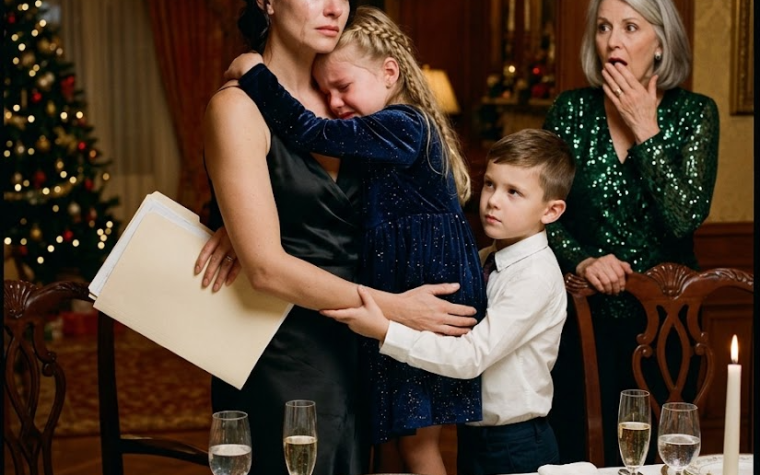
Sometimes it was accepting a hug from a child who saw tears and decided they were reason enough to care.
Clare looked across the table at Emma, who was now negotiating fiercely for part of her father’s cookie.
Then she lifted her still-warm coffee and smiled.
The castle had never been Marcus.
It had been Clare’s life.
And piece by piece, she was living in it again.