A judge issued a protective order barring him from contacting Olivia or approaching either hospital.
Nathan’s attorneys tried to secure his release by arguing that he was a respected physician with deep community ties.
The prosecutor used those same ties against him.
Influence, access to controlled medication, authority over witnesses, and ownership in the hospital did not make him safer to release.
They made him more capable of interfering with the case.
He remained in custody.
Two days later, Olivia went into labor.
The second hospital assembled a team with no connection to Nathan or St.
Victoria.
Every medication was explained before it was administered.
Every person entering the room introduced themselves.
The anesthesiologist sat beside Olivia and showed her the sealed syringes one by one.
Still, when it was time for surgery, Olivia began shaking.
“Mom,” she whispered, “what if he found a way?”
I took her hand.
“Look at me.
Nathan does not control this room.”
She searched my face.
“Promise?”
“I promise.”
A nurse placed a warm blanket over her shoulders.
The physician confirmed the plan again.
Olivia remained awake throughout the procedure.
When my grandson cried for the first time, Olivia made a sound I had never heard from her before—half laugh, half sob, all relief.
They placed him against her chest.
She touched his cheek and whispered, “We woke up.”
Those three words broke me more completely than anything else had.
I turned away for a moment so she would not see me cry.
In the months that followed, the legal process moved slowly, but Nathan’s power did not return.
Additional staff members came forward.
Some described threats to their jobs.
Others admitted they had noticed his control over Olivia but had convinced themselves it was a private marriage problem.
The clinic survived under new leadership, but Nathan’s name was removed from the building.
The board established independent reporting channels that administrators could not intercept.
The nurse who had preserved the deleted order kept her position and later helped rewrite the hospital’s patient-safety procedures.
Olivia filed for divorce.
Nathan fought over money, property, and custody from behind layers of attorneys.
He claimed she was vindictive.
He claimed I had destroyed his career.
He claimed the hospital had betrayed him.
He never accepted that his career had been destroyed the moment he treated a patient, a wife, and an unborn child as possessions.
The civil court froze his controlling interest in the clinic while Olivia’s claims were reviewed.
A portion of his assets was eventually placed in trust for their son’s care.
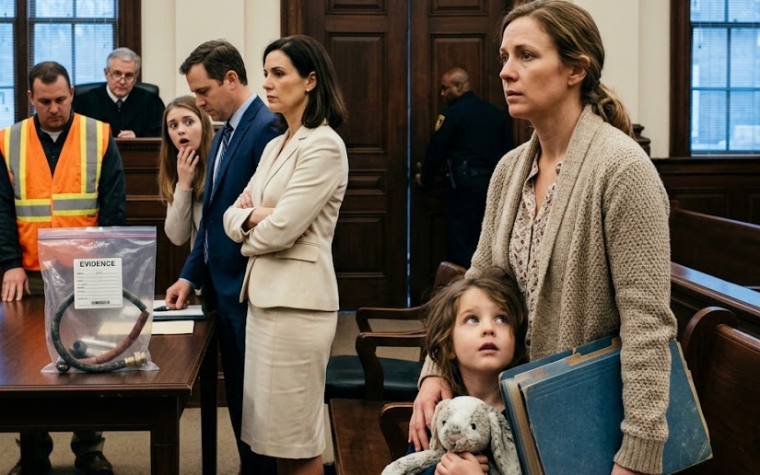
The criminal case ended with a conviction based on the recordings, medical audit, witness testimony, forensic comparison of the boots, and Nathan’s own statements.
He lost his license permanently.
Olivia did not celebrate the sentence.
She sat beside me outside the courtroom, holding her sleeping son, and stared at the closed doors through which Nathan had disappeared.
“I thought I would feel different,” she said.
“How do you feel?”
“Tired.”
I nodded.
Freedom did not arrive like fireworks.
It arrived as ordinary things Nathan could no longer control.
A phone with a password he did not know.
A front door he could not open.
A doctor she chose herself.