Mark’s face changed as he finally saw the structure around him.
He had always believed his promotion followed Richard’s breakdown and the company’s need for stability.
He had never asked why Natalie’s death had made the transfer so easy.
Linda reached for him.
“Mark, I did everything for our family.”
He pulled his arm away.
“Did you know she was alive every time you took Richard to that cemetery?”
Linda did not answer.
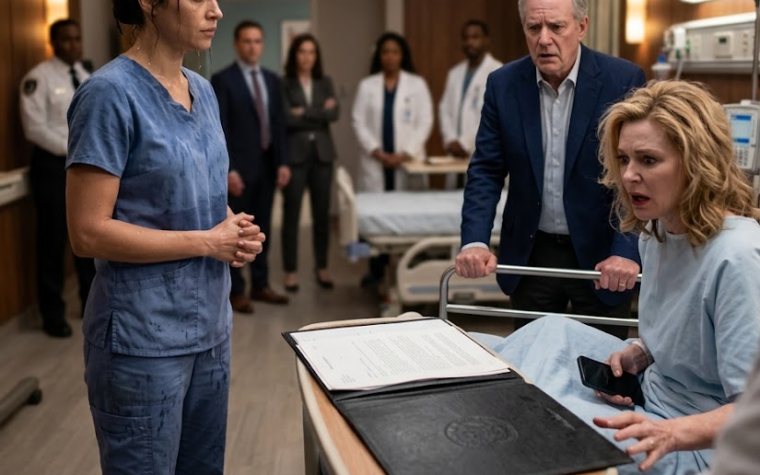
Natalie reached beneath her gown and removed an old phone.
Its screen was cracked near one corner.
“They returned my personal belongings last month,” she said.
“The clinic had stored them under the name Linda gave me.
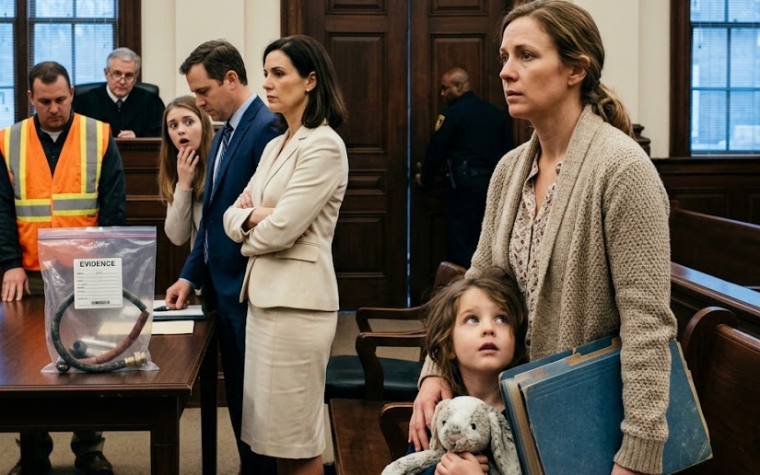
When a new administrator reviewed the files, she found my real identification sealed inside the evidence bag.”
Richard recognized the phone immediately.
He had paid that number for two years because disconnecting it had felt like losing Natalie a second time.
“Why didn’t you call sooner?” he asked.
The question came out more sharply than he intended.
Natalie’s expression closed.
Richard lowered his voice.
“I’m not blaming you.
I need to understand.”
She looked down at the moon bracelet.
“My memory came back slowly.
Linda kept showing me messages that looked like they came from you.
They said I had disgraced the family.
They said you never wanted to hear my name again.”
Arthur asked to see them.
Natalie unlocked the phone and handed it over.
The messages had been sent from an address using Richard’s name, but Arthur quickly found inconsistencies.
The language was too formal.
The signature matched phrases from company announcements prepared by Linda’s office.
Several messages had been created on dates when Richard was hospitalized and unable to use a computer.
“I started doubting them when I remembered the notebook,” Natalie said.
“Dad disappointed me many times, but he never wrote like that.”
Richard bowed his head.
“I was late for everything that mattered.”
“Yes,” Natalie said.
“You were.
But you never told me I should disappear.”
That distinction had saved her.
As her health improved, Natalie resumed her law studies remotely.
The clinic had accepted Linda’s claim that publicity would endanger her recovery, so staff restricted visitors and communications.
When Natalie asked to contact Richard directly, Linda warned that the theft investigation remained open.
Natalie believed her father’s lawyers were waiting to prosecute her.
She studied anyway.
The more law she learned, the less believable Linda’s story became.
Two months before graduation, Natalie requested her original medical records.
Linda attempted to block the release, but the new clinic administrator insisted on reviewing the admission file.
That review exposed the sealed evidence bag, Natalie’s identification and the transfer papers Linda had signed.
Natalie left the clinic the following day.
She did not contact Richard immediately.
She feared Linda still controlled his calls, staff and schedule.
Instead, she chose the one event that could not be hidden: her graduation under her full legal name.
“And I used the sentence from the notebook,” Natalie said.
“So you would know it was me.”
Richard’s eyes filled.