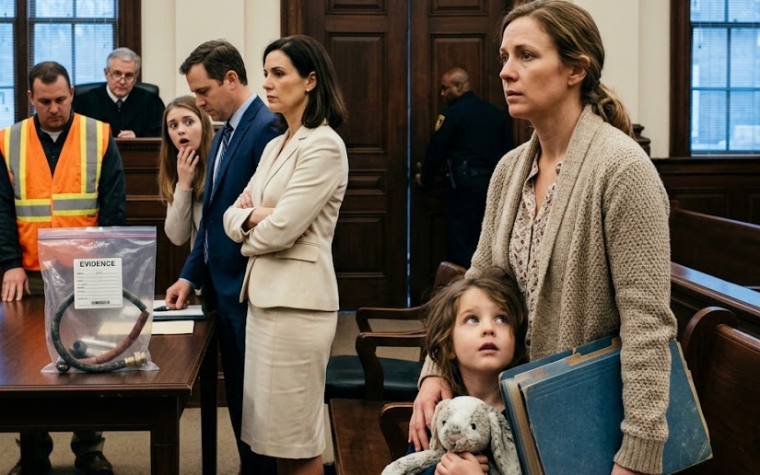
Fiona tried a different approach.
She softened her voice and came closer to me, still carrying the careful perfume she had worn at the funeral.
“Avery, everyone is emotional.
We made assumptions.
Let us put everything back and handle this privately.
Bradley would not want his family dragged through a criminal investigation on the day of his burial.”
She invoked his name as though he were still another object she could carry away.
I looked at the notebook she had returned to the table.
“Why did you take that?”
“I thought it contained family information.”
“You did not open it?”
She hesitated.
The lawyer answered for her.
“The office camera recorded you photographing several pages.”
Fiona’s composure cracked.
“There is a camera in there?”
Bradley had installed it after confidential files were disturbed during a family gathering.
He never accused anyone publicly.
He simply began documenting access to the office and moved sensitive material into secure storage.
That was Bradley’s way.
He did not threaten.
He prepared.
The lawyer asked Fiona to place her phone on the table.
She refused.
“You have no authority to take my property.”
“Correct,” he said.
“The police will decide whether they have authority to preserve evidence.”
She put the phone down.
Marjorie looked from one child to the other, and I saw her finally understand that the power she thought she had inherited from Bradley’s death had never existed.
Still, she was not finished.
“We will contest the deed.”
“On what basis?”
“Undue influence.
He was grieving, ill and confused.”
The room went silent again.
It was the first time anyone had suggested that Bradley lacked control over his own decisions.
The lawyer’s expression changed—not to anger, but to something colder.
“Bradley anticipated that accusation.”
From the folder, he removed a letter from an independent physician confirming that Bradley had full decision-making capacity when he signed the deed and estate documents.
There was also a statement from a second attorney who had reviewed the transfer without me present.
I had not known about the second attorney.
Bradley had protected me not only from his family’s greed but from the story they would tell about him afterward.
Marjorie read the first paragraph and pushed it away.
“He was manipulated.”
“By whom?” the lawyer asked.
She pointed at me.
“Her.
She isolated him.”
Declan seized on it.
“Exactly.
She kept him from us.
She controlled the information.
She probably had him sign anything she wanted.”
The lawyer waited until they finished.
Then he opened a smaller envelope.
“Bradley also left a recorded statement explaining his decisions.