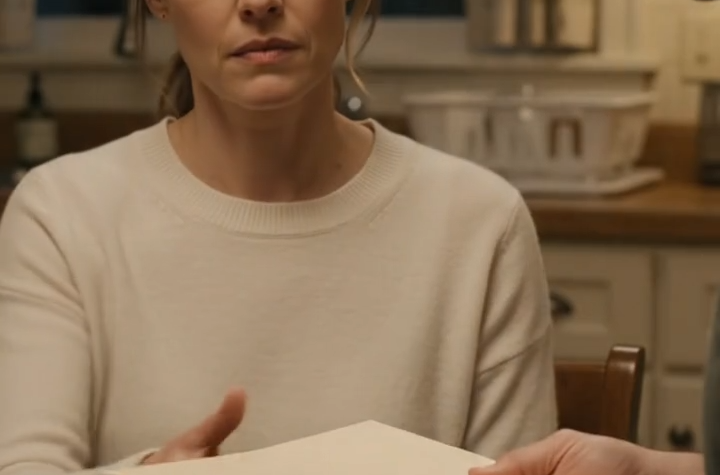
He had kept delaying the conversation with me because he knew I would insist on limits: how long, which room, what contribution, what alternatives had been considered.
He called those questions “complications.”
I called them respect.
He had hoped that once his parents were physically inside the house, I would feel too guilty to object.
That confession mattered more to me than any apology.
It confirmed what I had heard through the guest-room door.
Claire will adjust.
She always does.
They had not misunderstood me.
They had counted on me.
That realization made my decision clearer.
I moved forward with ending the marriage.
Not because Marjorie wore a cardigan.
Not because Harold needed a house without difficult stairs.
Not because families should never help one another.
I ended it because my husband had knowingly used my reluctance to create conflict as a tool against me.
He had made a decision about my home, withheld it because he expected my objection, and relied on embarrassment and family pressure to make resistance harder once his parents were already installed.
The paperwork took longer than the confrontation.
Real consequences usually do.
There were forms, conversations, inventories, financial records, and moments when Ethan seemed genuinely to understand what he had destroyed.
There were also moments when he slipped back into resentment and said I had overreacted.
Each time, I remembered the kitchen.
My cardigan on Marjorie’s shoulders.
Her hands moving my spice jars.
Ethan’s eyes fixed on his phone.
And the sentence that had changed everything.
We knew you’d say no.
That was the truth beneath all of it.
Months later, when the legal process was underway and the house had become quiet again, I finally put the kitchen back exactly the way I liked it.
The spices returned to their labeled shelf.
The coffee grinder reclaimed its corner.
The last Post-it note disappeared.
I washed the gray cardigan and folded it carefully.
For a while I could not bring myself to wear it.
It carried the memory of that morning too clearly.
Then one cold Saturday, I put it on before making coffee.
Nothing dramatic happened.
No one applauded.
No one apologized.
No one stood in a doorway and admitted I had been right.
The house was simply mine again.
I sat at the island with my mug warming both hands and thought about my father’s advice.
For years, I had believed the important part was keeping my name on the deed.
I had been wrong.
The paperwork had protected the house.
But the harder lesson was learning that I had to protect my right to say no inside it.
The cardigan had never really been the thing that broke me.
It was the thing that showed me how much I had already allowed to bend.
And when I finally stopped bending, the people who had mistaken my patience for permission were the ones who looked shocked.