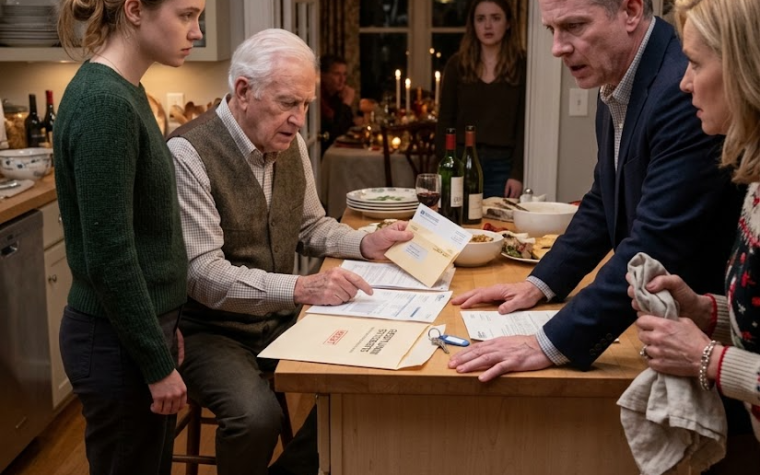
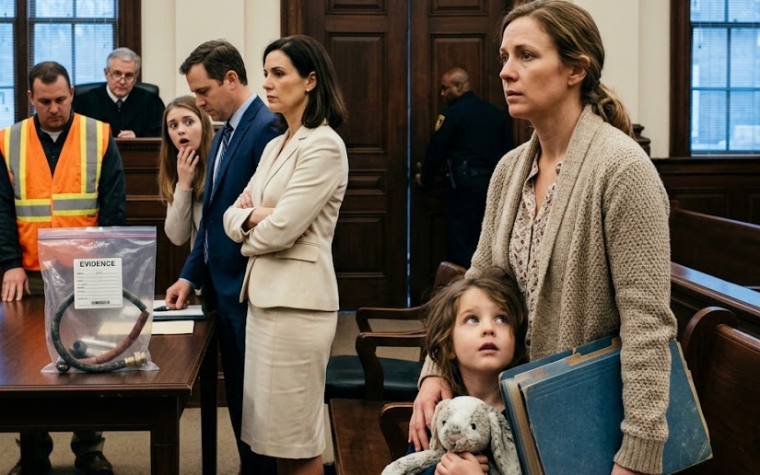
She said she had begged him to stop.
She said I had misunderstood the mortgage paperwork.
She even claimed I had previously agreed to cosign and had become “emotional” at the last minute.
That version lasted until the officers told her both of our parents had been present.
Then it changed.
Now she said she had been frightened of Trent.
Now she said she had frozen during the assault.
Now she said the signature on the authorization was probably part of an electronic document package and she had no idea how it got there.
But the physical page found in the garage complicated that explanation.
So did the rest of the paperwork.
My name appeared as a proposed additional borrower in more than one place.
Some fields were incomplete.
Some signature lines remained blank.
That explained why they still desperately needed me to sign before closing.
But the authorization page had already been signed in my name.
It was the page that permitted financial information to be gathered and used during the loan process.
I had never seen it before that night.
I had never given permission.
And I had never signed it.
The lender’s internal records supplied the next piece.
The authorization had been submitted before the garage confrontation.
That mattered.
Trent could no longer plausibly argue that somebody had scribbled my name down during the chaos after I refused.
The paperwork had entered the process earlier.
The problem for Chloe was that the lender also had a trail showing which household had transmitted the requested documents and which contact had communicated about adding me to strengthen the application.
It did not instantly prove who held the pen.
But it made her explanation much harder to maintain.
Two days after I woke up, Officer Hayes returned to the hospital with another investigator.
My shoulder had been stabilized, the swelling around my face had started to fade, and every breath no longer felt like it belonged to someone else.
The investigator placed a clear evidence sleeve on the table beside my bed.
Inside was a copy of the disputed authorization.
“Do you recognize this signature?”
I looked at it.
There it was.
My name, drawn with almost obsessive care.
And suddenly I remembered why it looked so familiar.
I asked my father to open the cabinet in my hospital bag where my wallet and belongings had been placed.
Inside was an old folded insurance receipt I had been carrying for months because I kept forgetting to throw it away.
It contained my genuine signature from the paperwork Chloe had helped our parents organize.
The investigator compared the two copies without touching either original.
The resemblance was obvious even before an expert examined them.
The same sweeping final stroke.
The same slightly oversized first letter.
But the mortgage signature looked slower.
Drawn rather than written.
My father whispered, “She copied it.”
I did not answer.
I didn’t need to.
The formal handwriting comparison came later.
It supported what I already knew: the signature was an imitation, not my natural writing.
More importantly, investigators recovered enough surrounding evidence to establish the larger sequence.
Chloe and Trent had been under enormous pressure to complete the purchase.
Their financing had weakened.
Adding a stronger cosigner could rescue the deal.
Chloe had approached me and been refused.
Instead of accepting that refusal, they kept moving forward as if I might eventually be brought into the loan.