“I heard you say no,” she said.
“At dinner.
I heard every word.”
“I know.”
“I looked away because I wanted everyone to stay happy.”
“Everyone except me.”
Her eyes filled, but I did not rescue her from the discomfort.
“I treated your time as less valuable because you were single,” she said.
“I told myself you were helping the family.
Really, I was helping Ryan avoid responsibility.”
It was not a perfect apology.
Nothing could compress eight years into a single conversation.
But it was the first one that named the harm instead of asking me to forget it.
“I love the children,” I said.
“I will be their aunt.
I will not be their unpaid parent.”
Mom nodded.
“I understand.”
The investigation lasted several months.
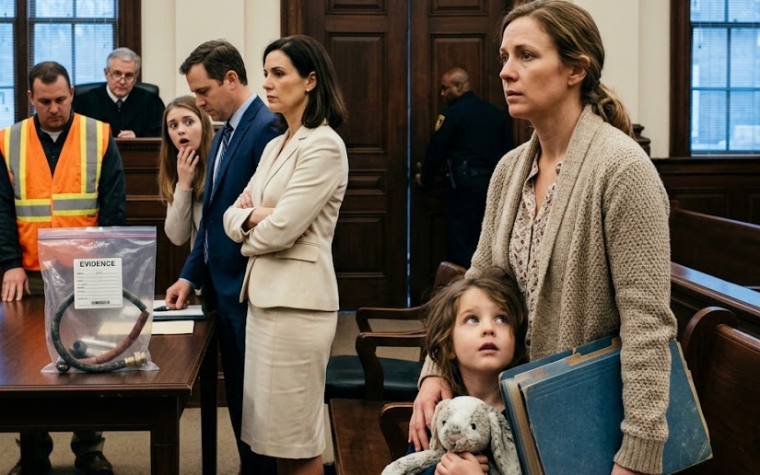
Ryan and Madison were not sent to prison, nor were the children permanently removed.
The caseworker determined that the children could return home under a monitored plan after Ryan and Madison completed required parenting sessions, arranged verified childcare, and agreed to regular visits.
Ryan also accepted responsibility in court for leaving the children unattended.
The result included supervision requirements, fees, and a formal record of the incident.
His attorney called it a preventable mistake.
Officer Daniels called it a decision.
That distinction mattered to me.
During the review, Ryan tried repeatedly to persuade me to change my statement.
First he apologized.
Then he blamed exhaustion.
Then he said Madison had misunderstood him.
Finally, he accused our parents of turning me against him.
I answered only once.
I sent him a copy of the message he had read at 10:14 p.m.
Beneath it, I wrote: You understood me.
You just believed my answer did not matter.
He did not reply.
Madison contacted me several weeks later.
Her message began defensively and ended differently.
She admitted that she had expected the police call to frighten me into taking over.
She said Ryan had assured her I would never allow the children to remain with authorities, no matter how angry I was.
They had counted on my love for the children while dismissing every boundary I set.
She apologized for saying I had no family.
I did not tell her everything was forgiven.
I wrote back: The children are my family.
That is why I will never help you use them as leverage again.
After the children returned home, I removed myself from every school and medical emergency list.
I sent Ryan and Madison a written boundary: visits would be planned in advance, I would not provide routine childcare, and genuine emergencies had to be defined by circumstance—not convenience.
I also changed the spare lock on my apartment after learning Ryan still had an old key.
Months later, we gathered again at my parents’ dining table for the oldest child’s birthday.
The room looked almost exactly as it had on the night of the pregnancy announcement, but the balance had changed.
Ryan served the children before himself.
Madison carried the cake.
Mom asked whether I was available the following weekend, then immediately added, “For lunch.
Just lunch.
No babysitting.”
I smiled.