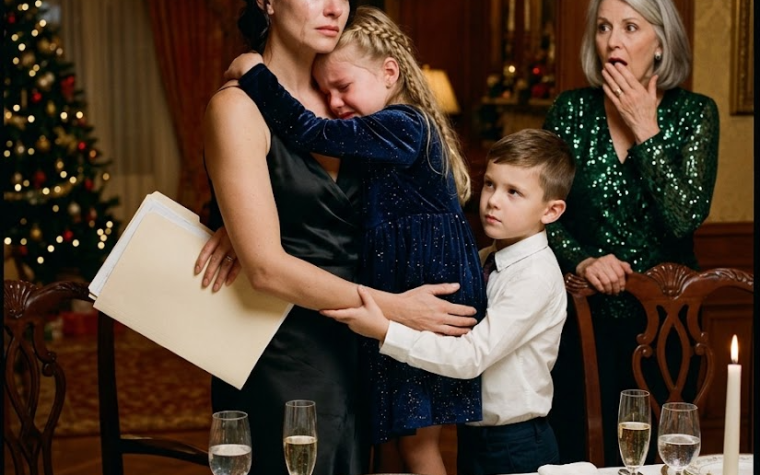
“He’ll lose everything.”
“He believed I should lose everything because he wanted it.”
My mother asked whether there was any way to let the house remain.
She suggested rent, a sale, a family trust—anything that would prevent the walls from coming down.
I looked at the two of them and understood that even after the ruling, they were still searching for a version of the ending in which I absorbed the damage.
“No,” I said.
It was the calmest word I had ever spoken.
The removal took months.
The contractor would not resume work until Ryan paid the outstanding invoices.
His lender froze further construction funds after learning that the permitted house had been built on the wrong parcel.
Every delay cost him more, but the court required the site to be secured and the structure removed safely.
I did not attend when the framing came down.
I went only once, on the morning the concrete was broken apart.
The excavator’s bucket struck the foundation Ryan had believed would make his claim permanent.
The slab cracked through the living room, then the kitchen, then the place where Madison’s wedding table was supposed to stand.
Piece by piece, the trucks carried it away.
Madison sent me a copy of the original recording and a brief message.
She said she was sorry she had believed Ryan for as long as she had.
She said she knew speaking in court did not erase the housewarming, the lies, or the months of pressure.
I answered with the truth.
“You did what everyone else was too afraid to do.
You stopped protecting him from the consequences of his own choices.”
My parents did not apologize immediately.
My father first called the ruling unfair.
Then he called it excessive.
Weeks later, he admitted that he had always known the deed was legally mine.
He said he had assumed I would eventually sacrifice the meadow because Ryan wanted to raise a family there.
I told him that assumption was the wound.
My mother admitted that she had seen the survey before the housewarming.
She had asked Ryan whether he was sure.
When he said he had everything under control, she chose to believe him because confronting him would have disrupted the celebration.
I did not shout at either of them.
I simply stopped making their comfort the price of having a relationship with me.
By spring, the last concrete had been removed.
The ruts were filled, the soil was graded, and new grass began covering the scars where the foundation had stood.
I walked the boundary with the surveyor one final time.
Near the edge of the meadow, he uncovered an old iron marker beneath the weeds.
It had been there long before Ryan’s plans, long before the permit, long before my father decided intention mattered more than ownership.
I placed a new wooden stake beside it.
Then I unfolded the deed.
Months earlier, in court, the paper had whispered because my hands were shaking.
Now it remained perfectly still.
The meadow was not valuable because Ryan had wanted it.
It was not mine because a judge rescued it, because Madison exposed him, or because my family finally understood.
It was mine before the first truck arrived.
The difference was that now, when I said it, no one expected me to surrender.