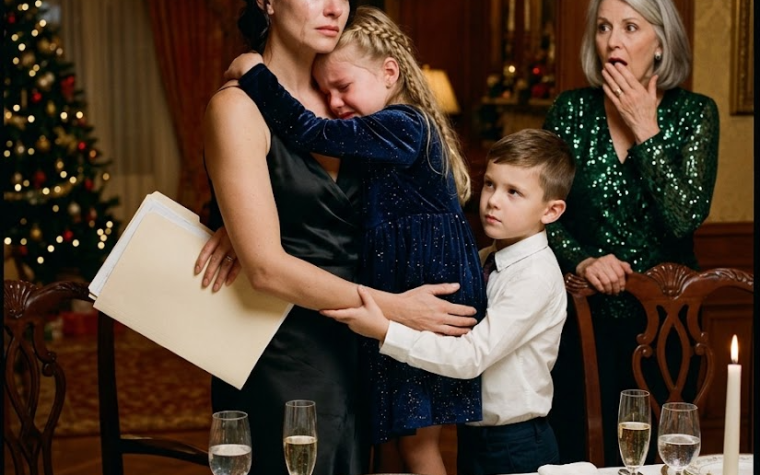
She loved both parents.
She did not want to choose.
She wanted the adults to stop asking her to prove which one deserved her more.
That became the sentence I remembered most.
Not anything Caleb said.
Not anything I said.
Hers.
By the time our divorce was finalized, Caleb’s demand for full custody had been abandoned.
Harper continued to have a relationship with both of us, but the parenting arrangement was structured around her routine rather than either parent’s desire to win.
The court’s orders made clear that she was not to be used as a messenger, witness, or weapon between us.
The financial issues were settled too.
Money that had been moved out of my sight was accounted for in dividing what we had built during the marriage.
There was no cinematic moment when Caleb suddenly confessed everything and begged forgiveness.
He never became that person.
For a long time, he insisted the video had been misunderstood.
He said he had only been trying to prepare Harper.
He said my lawyer had made ordinary parenting sound sinister.
He said the whole situation had gotten out of hand.
But he stopped saying I had imagined it.
That mattered.
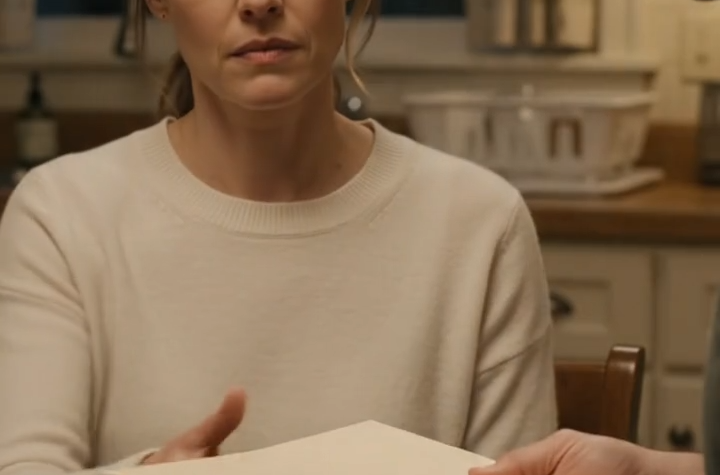
Months later, Harper and I were sitting at the kitchen table doing homework when she asked whether I still had a copy of the video.
I told her my lawyer had preserved what was necessary for the case.
She stared at her math worksheet.
Then she said, “I don’t want to watch it again.”
“You don’t have to.”
“Do you?”
I thought about that.
The recording had changed everything.
It had exposed Caleb’s attempt to control the story before Harper ever spoke for herself.
It had broken through the careful image he had carried into court.
It had helped me defend my place in my daughter’s life.
But it was also a record of a ten-year-old girl realizing that an adult she loved wanted her to say something she did not believe.
“No,” I said.
“I don’t need to watch it again either.”
Harper nodded and returned to her homework.
A few minutes later she asked me for help with a fraction problem.
That ordinary question nearly made me cry.
For so long, every conversation in our house had felt connected to the divorce.
Every expression could become evidence.
Every silence could be interpreted.
Every mistake seemed dangerous.
Now she was simply asking her mother for help with math.
I pulled my chair beside hers.
The divorce had taken my marriage, much of my savings, and nearly every illusion I had about Caleb.
But it had not taken my daughter.
And in the end, the thing that saved me was not shouting louder than he did.
It was not humiliating him in return.
It was not convincing everyone that I had never been angry, hurt, messy, or afraid.
I had been all of those things.
I was human.
What mattered was that when Caleb tried to turn those emotions into a story that erased everything else I had been to Harper, the truth existed outside his version of it.
In bank records.
In messages.
In the ordinary history of who had been there.
And, most painfully, in a video my daughter had made because she was afraid her own memory would not be enough.
I never thanked Harper for recording it.