“I said not now.
Tell everyone there’s been an emergency.”
He ended the call.
“You should go,” I said.
“Claire, if she’s mine—”
“Then we’ll handle that for her sake.
Not yours.
Not mine.
Hers.”
He looked at the baby again.
“Do you hate me?”
Of all the questions he could have asked, that was the one that surprised me.
Months earlier, I would have answered immediately.
Now I thought about it.
“I don’t have enough room in my life for that anymore.”
His eyes dropped.
Then he left.
The wedding did not happen that afternoon.
I learned that from no dramatic confrontation and no triumphant phone call.
Brandon’s sister sent my mother a short message saying the ceremony had been postponed and the guests had been sent home.
For once, I felt no satisfaction.
I was exhausted.
My daughter needed feeding.
My body hurt.
The flowers beside the bed were beginning to droop.
Real life had already moved beyond Brandon’s crisis.
Three weeks later, his attorney formally requested genetic testing.
We agreed.
The result came back exactly as the dates, the clinic records, and the medical history indicated it would.
Brandon was her biological father.
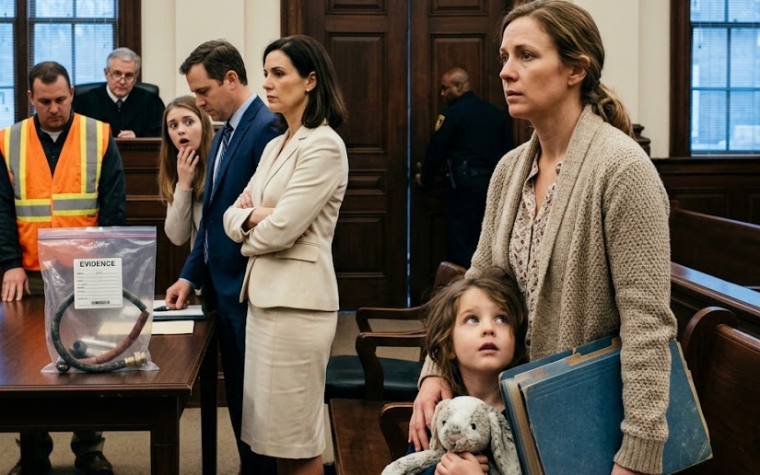
There was no dramatic courtroom gasp when the result was filed.
No judge slammed a gavel.
No crowd watched him collapse.
There were simply consequences.
Parentage was established.
Financial support was calculated.
Medical expenses connected to the birth were addressed.
A parenting arrangement had to be negotiated carefully and with the child’s well-being ahead of either parent’s anger.
Brandon tried once to argue that I had deliberately kept him uninformed.
My attorney placed the divorce disclosure in front of his lawyer.
There was my pregnancy.
There was the reservation concerning the child.
There was Brandon’s signature.
His argument disappeared almost immediately.
The divorce itself was not magically erased.
I did not suddenly receive every house, share, or dollar we’d fought over.
Life rarely repairs itself that neatly.
But Brandon could no longer pretend that his refusal to read had created an obligation for everyone else to protect him from reality.
And the story he’d told about me began to crack.
During the divorce, he had portrayed me as irrational whenever I questioned missing nights or inconsistent explanations.
Now people who had once accepted his version began quietly remembering details they’d dismissed.
His business trips.
Madison’s sudden promotion.
The speed of the engagement.
The way he’d pushed to finalize the divorce without reviewing changes.
I didn’t organize a campaign against him.