I didn’t need one.
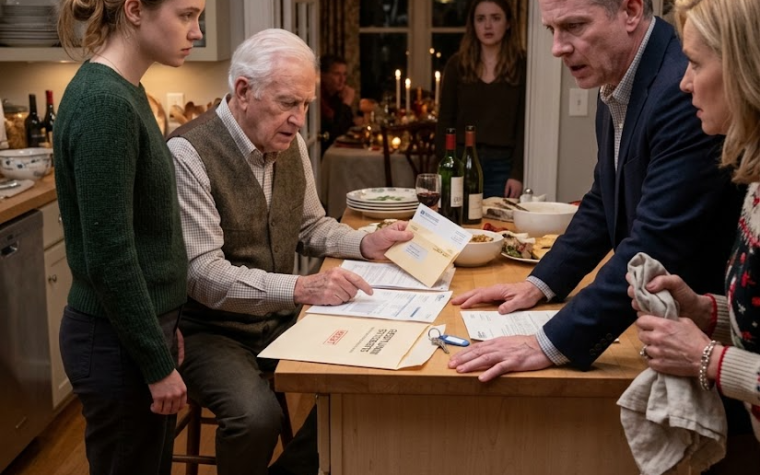
Documents have a strange dignity.
They do not shout.
They wait.
Madison eventually contacted me once.
Her message was short.
She said she was not asking forgiveness and did not expect it.
She only wanted to know whether Brandon had known the transfer might have succeeded when he began planning a life with her.
I answered with the truth.
I didn’t know what Brandon knew in his own mind.
I only knew what he’d signed, what he’d been told, and when he left.
She never contacted me again.
She also never became Mrs.
Bennett.
Months later, Brandon came to see our daughter under the arrangement we’d established.
He arrived without a tuxedo, without an audience, and without the confidence he’d carried into my hospital room.
He stood near the doorway holding a small stuffed animal he had bought for her.
“She’s gotten bigger,” he said.
“Babies do that.”
For a moment, the corner of his mouth moved as if he almost recognized the old rhythm between us.
Then it disappeared.
He looked down at our daughter.
“I handled everything badly.”
It wasn’t enough to repair what had happened.
Some apologies arrive after the bridge is already gone.
But I no longer needed him to understand the full cost of what he’d done before I could move forward.
That had been the trap of our marriage: waiting for Brandon’s acknowledgment before trusting my own reality.
I wasn’t waiting anymore.
The baby stirred and reached one small hand toward the stuffed animal.
Brandon handed it to her carefully.
I watched him, not with hope for us, and not with the desire to punish him, but with the caution of a mother deciding what kind of relationship would be safe and healthy for her child.
That was the only future that mattered now.
Not the one Brandon had bragged about outside the cathedral.
Not the one Madison believed she was marrying into.
Not the one I once thought I had lost.
The future was sleeping in my arms the morning he called me cold.
And when Brandon finally understood that, he had left his own wedding and run through a storm to confront me.
He believed he was running toward a disaster I had created for him.
He was wrong.
I had not ruined his wedding.
I had not trapped him.
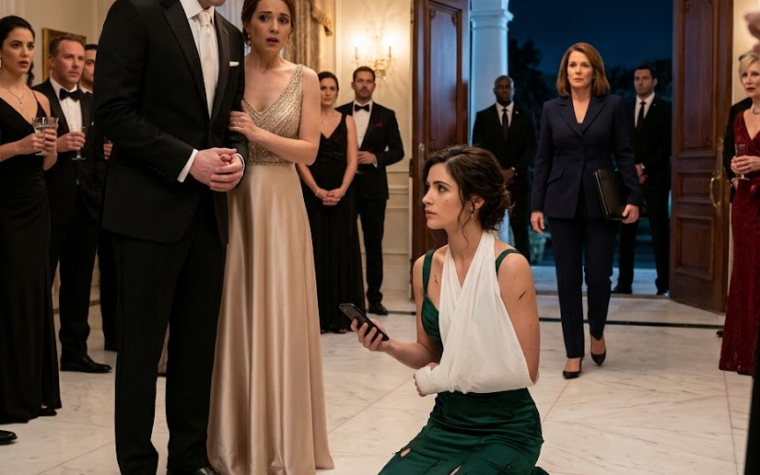
I had not planned the timing of his phone call, his panic, or his decision to leave Madison standing in a cathedral full of guests.
All I had done was tell the truth when he asked.
The rest had been waiting in paperwork bearing his own signature.
On the afternoon I left the hospital, my mother carried the flowers while I carried my daughter.
The cream folder stayed tucked inside my bag.
Outside, the storm had passed.
Chicago was cold and bright, the pavement still shining with rain.
For six months after the divorce, I had thought freedom would feel dramatic when it finally arrived.
It didn’t.
It felt like walking slowly toward the car with my daughter against my chest, knowing I no longer had to prove to Brandon Bennett that my life was real.
He had finally read the details.
I had already started living them.