Navaro rose again.
“Self-serving testimony.”
I looked at him for the first time that morning.
“The full recording will answer you.”
His face changed.
Barely.
But enough.
Judge Wexler noticed.
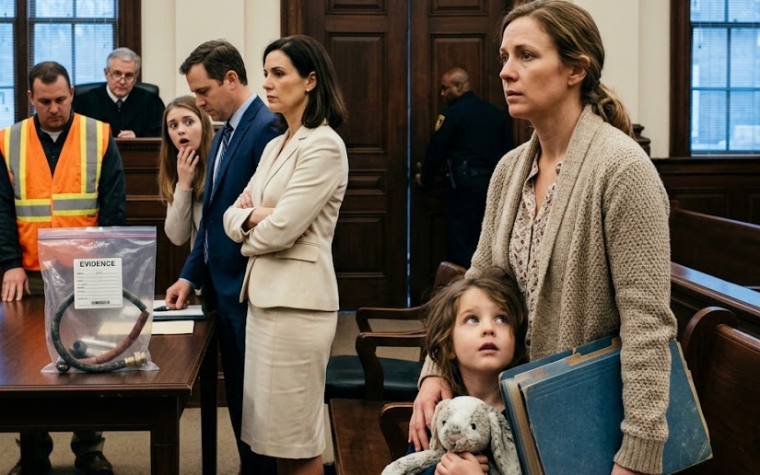
The court recessed while the restricted file was authenticated through the appropriate channels.
Nobody was permitted to remove documents or access the audio independently.
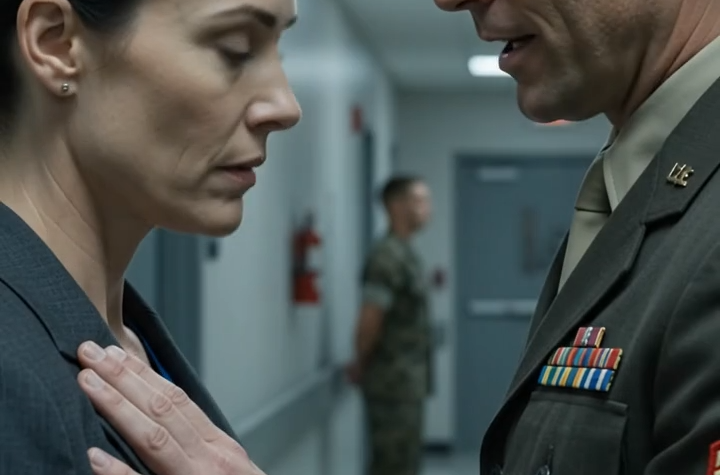
In the hallway, my father cornered Navaro near a vending machine.
I could not hear every word, but I heard enough.
“You told me she was there,” Dad said.
Navaro kept his voice low.
“The broader pattern remains the same.”
“What pattern? She wasn’t even in San Diego.”
“Miguel, grief creates imperfect timelines.
That does not change undue influence.”
My father stared at him.
Then he asked, “How did you get that recording?”
Navaro glanced toward me.
It was instinctive.
Dad followed his eyes.
For the first time since the funeral, my father looked at me without accusation already loaded behind his face.
He looked afraid.
Not of me.
Of the possibility that he had been used.
I did not rescue him from that feeling.
When court resumed, the authentication came back quickly enough to make Navaro’s attorney smile disappear completely.
The recording was genuine.
The excerpt was not.
The full sequence contained the missing words before my response.
My mother’s tired voice filled the courtroom again, but this time nobody had to imagine what she meant.
She was complaining about another hospital call, another form, another appointment she did not have the strength to manage.
Then my voice:
“I’ll take care of it, Mom.”
And hers:
“I’m tired, Paloma.
I’m so tired.”
A few seconds later, she thanked me for handling the medical paperwork.
The supposedly sinister exchange collapsed in less than half a minute.
My father sat perfectly still.
Navaro did not look at him.
Judge Wexler stopped the playback.
“The excerpt submitted yesterday omitted directly explanatory material.”
Navaro tried to recover.
“The omitted portion does not eliminate the possibility of broader coercion regarding the estate.”
“No,” the judge said.
“But it substantially affects the credibility of the evidence you chose to present.”
Then she opened the older disciplinary file.
“This is where case 89B becomes relevant.”
Navaro’s shoulders stiffened.
The judge summarized only what the court was permitted to state publicly.
Years earlier, Navaro had been investigated after protected records were obtained and presented outside their proper context during a legal dispute.
The review found serious violations involving access, handling, and selective disclosure.
My work had helped establish the chain of custody.