“You’re really doing this?”
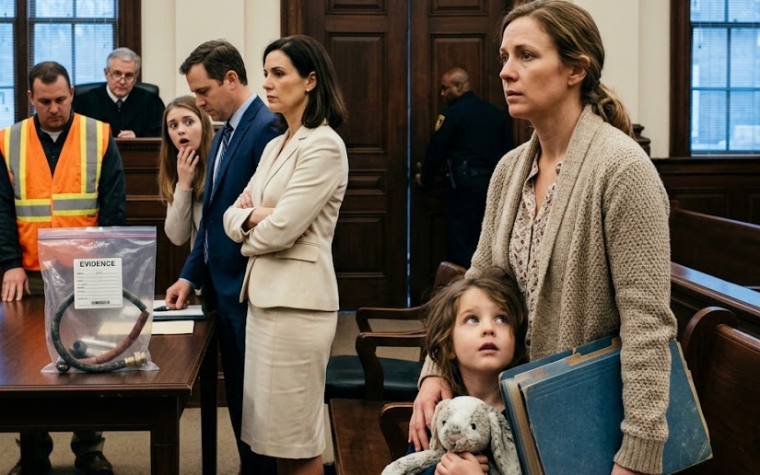
I set an empty bag on the table.
“Doing what?”
“Breaking up this family over one mistake.”
For weeks, that sentence might have worked on me.
It didn’t anymore.
“The mistake was Daniel swallowing the magnets.”
Carlos looked away.
“What you did afterward was a choice.”
“I didn’t know it was dangerous.”
“Then you should have asked a doctor.”
“I was trying to keep you from panicking.”
“You were trying to control what I knew.”
He slammed his palm against the counter, not hard enough to break anything, but hard enough to remind me how often anger had been used to end conversations in our house.
This time I didn’t stop talking.
“He begged me for help while you already knew what had happened.
You watched him get weaker and made me doubt myself.
You made him afraid to tell me the truth.”
Carlos’s face hardened.
“So what now? You think you’re taking my son away from me?”
I picked up the bag.
“That’s not a decision you’re making in this kitchen.”
Over the following weeks, I spoke with an attorney and cooperated with the investigation.
Daniel’s medical records established the seriousness of the delay.
My messages with Carlos established how many times I had raised concerns.
Daniel’s account established that Carlos had known from the beginning.
Carlos continued insisting that he had merely made a bad judgment call.
Maybe that was easier for him than admitting the truth.
His worst decision had not happened in one moment.
It had happened repeatedly.
Every time Daniel complained.
Every time I asked for help.
Every time Carlos chose silence because a doctor’s bill, an argument, or admitting he had been wrong felt more important than listening to his son.
The family court eventually ordered that contact with Daniel remain supervised while the child-protection matter was reviewed.
I filed for separation.
Carlos called me cruel.
He said I was destroying the family.
For once, his words didn’t make me question myself.
Daniel came home from the hospital with a small bandage, a list of follow-up appointments, and an appetite that slowly began returning.
The first morning he asked for his favorite breakfast again, I had to turn toward the stove so he wouldn’t see me crying.
A few days later, I heard a ball bouncing in the hallway.
Once.
Twice.
Then a crash.
“Sorry, Mom!”
I laughed before I could stop myself.
It was the most beautiful noise I had heard in weeks.
Recovery wasn’t instant.
Daniel became nervous whenever his stomach hurt.
He asked repeatedly whether ordinary aches meant something terrible was happening again.
A counselor helped him understand that adults are supposed to respond when children say they’re hurt, and that keeping a dangerous secret had never been his responsibility.
I had things to relearn too.
For years, Carlos’s certainty had been louder than my instincts.
If I worried, I was dramatic.
If I questioned him, I was starting a fight.
If Daniel needed something Carlos considered unnecessary, I was spoiling him.