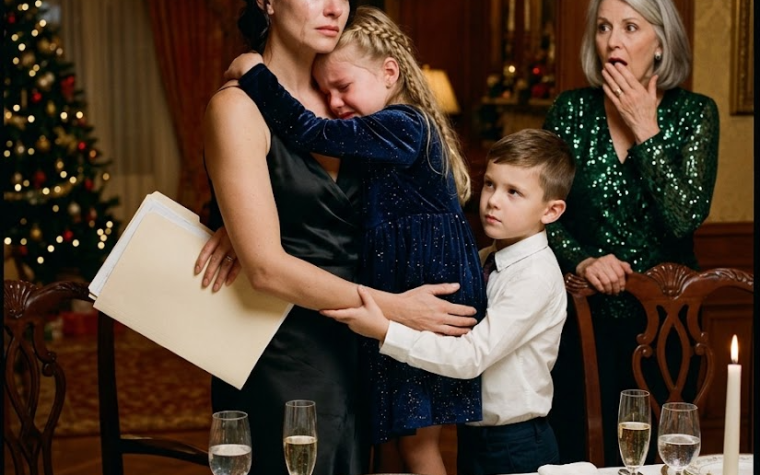
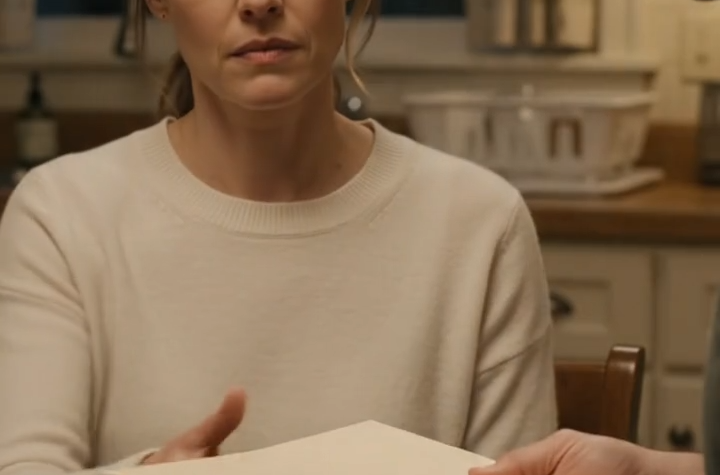
His face reddened.
“I’m family.”
“So am I.”
That ended the argument more effectively than shouting would have.
Bobby turned to our mother.
“Did you know she paid this much?”
My mother pressed her lips together.
“I knew she helped.”
“This isn’t helping,” he said, pointing to the total.
“This is carrying the place.”
The word hung in the room.
Carrying.
My mother looked at me, and for the first time since the holiday lunch, certainty disappeared from her face.
My father cleared his throat.
“We should sell,” he said.
She turned on him.
“You cannot be serious.”
“We cannot afford the cabin without Kinsley’s money.
And we have no right to expect her to continue.”
Steven accused him of taking my side.
My father shook his head.
“There should never have been sides.”
My mother left the table before the meeting ended.
But she could not make the deed disappear.
Two weeks later, after Elena filed the initial partition paperwork, my parents agreed to list the property voluntarily.
The appraisal came in higher than anyone expected.
Years of improvements—including several I had paid for—had increased the value considerably.
My mother wanted to control the sale.
I refused to let her choose a family friend as the agent, and Elena insisted on an independent broker.
The cabin sold four months later.
At closing, the remaining loan was paid off.
The proceeds were divided according to the deed, with an additional negotiated credit for a portion of the expenses I had paid beyond my share.
I did not recover every dollar.
Legal settlements rarely restore every invisible sacrifice.
But I recovered enough to replace the savings I had drained and make the down payment on a small home that belonged only to me.
Steven stopped speaking to me for several months.
Bobby eventually sent a short message admitting he had not understood how much I had done.
It was not a perfect apology, but it was the first honest sentence he had offered me in years.
My father began paying his own bills online.
The first time he called with a question, he caught himself before asking me to fix the problem.
“Can you show me where I’m going wrong?” he asked instead.
That difference mattered.
My mother did not apologize for the lunch.
She said she regretted how everything had unfolded, which was not the same thing.
She mourned the cabin loudly.
She spoke of lost traditions and family memories without acknowledging that those memories had depended on one person quietly absorbing the cost.
For a while, I wanted her to admit exactly what she had done.
I imagined her calling everyone back to the dining table and correcting the story.
Kinsley was never the burden.
We were relying on her.
That confession never came.
Eventually, I understood that I did not need it in order to live differently.
The first holiday after the sale, I did not return to my parents’ house.
I invited my father for breakfast the following morning and told my brothers they could visit another weekend if they called first.
On the holiday itself, I cooked a small meal in my new kitchen.
The table was secondhand.