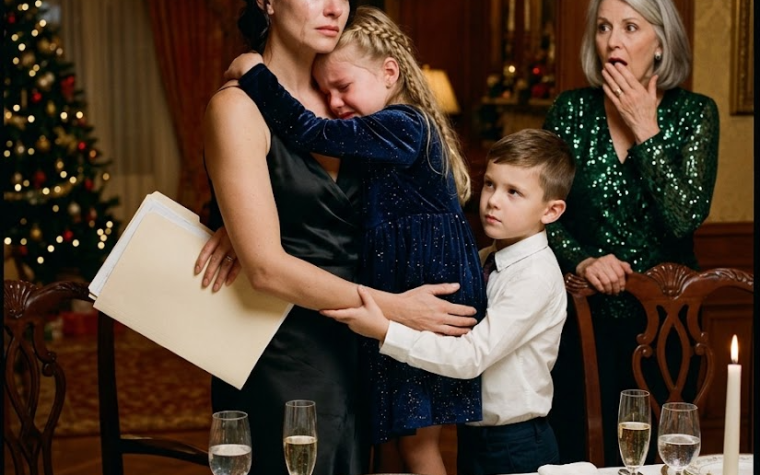
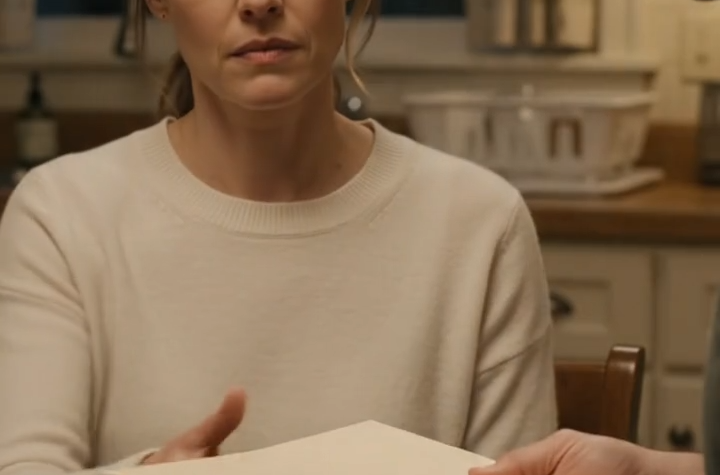
“By talking to hospital staff behind my back?”
“By giving them perspective.”
“Whose perspective?”
“Mine.”
“About Ren’s breathing?”
That stopped her.
She looked away.
I continued.
“You didn’t know what was happening in her lungs.
You didn’t know what her oxygen level was.
You didn’t examine her.
You just knew I was worried, and because I was worried, you assumed the worry itself must be the problem.”
“You have always been anxious.”
“Maybe I have.
That doesn’t make you qualified to tell an emergency department how seriously to take my child.”
Her eyes hardened.
“Nothing happened to her.”
I set the coffee down.
“That’s the argument you’re going with?”
“She’s fine.”
“She’s improving because she’s being treated.
The doctor told me bringing her in when I did mattered.”
My mother shook her head.
“You hear everything in the most dramatic possible way.”
For years, that sentence would have dragged me into a trial I could never win.
I would have begun listing evidence from my own life, trying to prove that my emotions deserved admission into the record.
This time I didn’t defend myself.
“You don’t get to make medical judgments for Ren again,” I said.
She laughed once, without humor.
“What does that even mean?”
“It means you don’t speak to her doctors for me.
You don’t minimize symptoms.
You don’t tell her she’s dramatic when she’s scared or sick.
And until I trust that you’ll respect those boundaries, you’re not taking her anywhere without me.”
Her face went completely still.
That was the real reversal.
Not the lawyer.
Not the camera.
Not even the hospital documentation.
It was the moment my mother realized the authority she had always assumed over me did not automatically extend through me to my daughter.
“You’re keeping my granddaughter from me?”
“I’m changing what access looks like.”
“Because of one comment?”
“Because when Ren needed adults around her to take her seriously, you decided your opinion of me mattered more than her symptoms.”
She stared at me.
“You will regret making an enemy out of your own mother.”
There was the threat beneath all the softer language.
I felt it land.
And then, surprisingly, I felt it pass.
“I’m not asking you to be my enemy,” I said.
“I’m asking you to stop overriding me.
What you do with that request is your choice.”
She left without saying goodbye to Ren.
The next morning, after Ren was stable enough for us to go home, I called my lawyer again.
We did not file some dramatic lawsuit.
There was no courtroom confrontation, no judge pounding a gavel, no instant punishment.