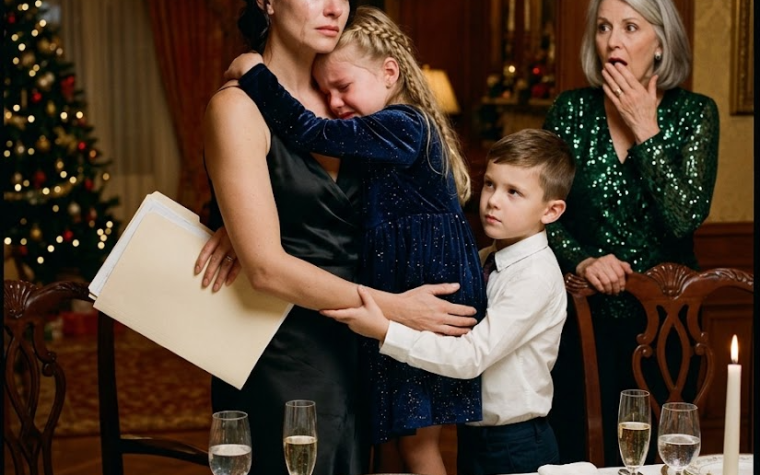
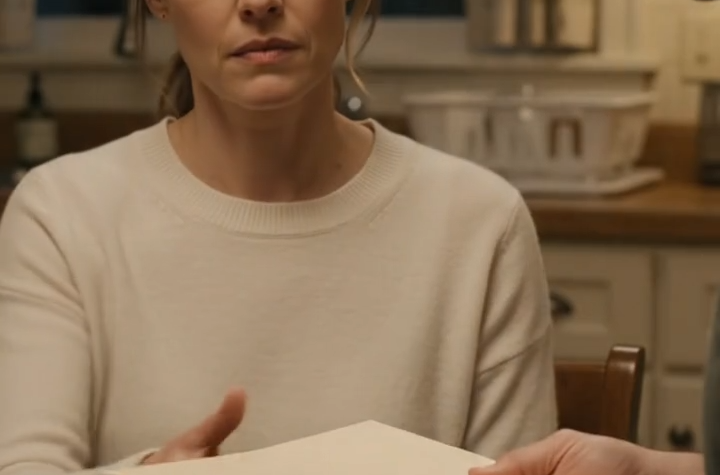
Amanda looked around the table and seemed to realize that every person she had expected to control was now waiting for her to explain herself.
She tried the version of her voice that had worked on us for years—soft, injured, offended by the very existence of suspicion.
“Heather is making this sound criminal when it was supposed to be temporary.”
My father spoke for the first time.
“Using her Social Security number was temporary?”
Amanda flinched.
I felt something inside me settle.
Until that moment, a part of me had still expected my parents to ask me to lower my voice, protect my sister, or discuss it privately after dinner.
Instead, my father reached for the first document.
He read my name at the top, then studied the signature at the bottom.
“How did you get this?” he asked Amanda.
She folded her arms.
“Heather signs birthday cards.
She has left paperwork here before.
It was not difficult.”
The cruelty of that answer was almost cleaner than a denial.
She had not stumbled into my identity.
She had studied it.
Daniel’s voice came through the speaker.
“Miss Wilson, I recommend that you end any direct discussion that could interfere with the investigation.
We will contact you Monday after our legal department reviews the file.”
“Thank you,” I said.
Amanda leaned toward the phone.
“You have no proof I submitted anything.”
Daniel did not answer her accusation.
“Miss Wilson, please preserve all communications and do not surrender your copies of the documents.”
“I understand.”
The call ended.
For several seconds, nobody moved.
Then Amanda laughed.
It was not a happy sound.
It was a thin, brittle attempt to pull the room back under her control.
“This is ridiculous.
Heather is angry because I have a house and she does not.
She has always acted like being careful makes her morally superior.”
I slid the handwriting report toward her.
“The expert found hesitation marks.
Whoever signed my name practiced it instead of writing naturally.”
She did not touch the paper.
Brian did.
He read two pages before lowering himself back into the chair.
“You told me the paperwork had been corrected,” he said.
Amanda glared at him.
“Do not do this here.”
“What paperwork?” I asked.
Brian rubbed both hands over his face.
Six months earlier, he explained, their original mortgage application had failed.
Amanda’s business income was inconsistent, their existing debts were too high, and Brian’s credit had been damaged by a failed investment.
The seller had given them a short extension, but they were days from losing the house and their deposit.
Amanda had told him she found a private financing solution through a broker.
He claimed he never saw the final borrower documents.
I believed that he had chosen not to look closely.
That was not the same as innocence, but it was different from forging my name.
Amanda turned on him.
“You wanted that house as much as I did.”
“I wanted a house,” he said.