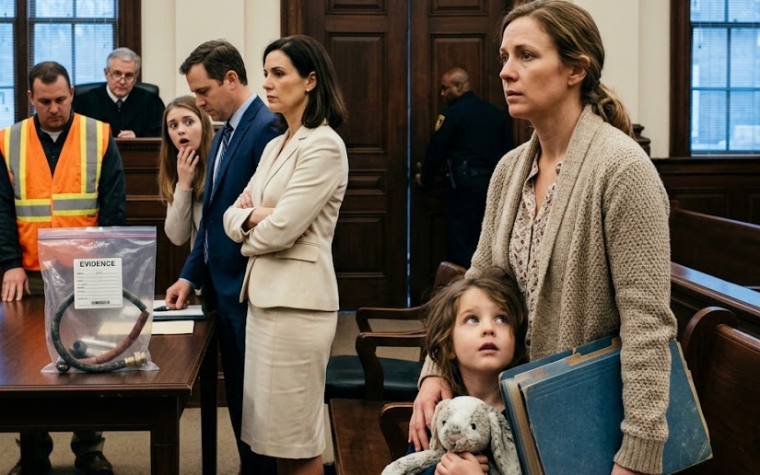
Each code had been entered within minutes.
I placed a printout of those timestamps beside the statements.
Mom stared at them.
“I didn’t know what they were for.”
Kendra’s jaw tightened.
“Mom, stop talking.”
Dana heard her.
“Kendra, did you instruct Patricia Collins to provide those codes?”
“No.”
“Then why did your business receive the funds?”
“It didn’t.”
I pulled out the transfer records.
The first advance had gone directly into an account belonging to Kendra’s home-decor business.
The second paid a supplier in Kentucky.
The third covered six months of rent on her boutique.
Smaller withdrawals paid for advertising, furniture, a weekend conference, and what appeared to be several personal expenses.
One charge came from the dealership where Kendra leased her SUV.
Another came from the designer store that sold the cream blouse she had worn while breaking my phone.
I watched her read the merchant names.
She stopped denying that the money existed.
Instead, she changed the accusation.
“You had the credit available,” she said.
“I was going to pay it back.”
Mom closed her eyes.
The sentence hung in the room like smoke.
Dana asked, “Are you acknowledging that you used the account?”
Kendra looked at the phone and realized what she had said.
“No.
I’m saying hypothetically.”
“You just said you were going to pay it back,” I replied.
“Because you’re twisting everything.”
She stood and pointed at me.
“You have always wanted me to fail.
You sit in your little apartment with your spreadsheets and your savings accounts, judging everyone who actually takes risks.”
I remained seated.
The old version of me would have defended every choice I had made.
I would have explained how long I had worked, how carefully I had saved, and how often I had helped her.
That morning, I finally understood that explanations were gifts.
Kendra used every explanation as material for a new argument.
So I gave her evidence instead.
“The account required a payment of $9,842 by Friday,” I said.
“That was why you asked me for ten thousand.”
Kendra’s mouth opened, but no sound came out.
The lender had flagged the account after an automated review found inconsistencies between the application and my verified employment records.
They had sent an alert to my phone during the argument in Mom’s kitchen.
It was the notification Kendra saw when she picked up my iPhone.
It said additional identity verification was required.
Breaking the phone had not been an impulsive tantrum.
She believed that if she destroyed the device before I read the alert, she could delay the review and pressure me into giving her enough money to cover the payment.
The broken screen was not the crime she was hiding.
It was her attempt to keep the larger crime alive.
Mom began to cry.
“Kendra told me the account was temporary,” she whispered.
“She said Mallory had agreed to help but was too busy to finish the paperwork.”
I looked at her.
“You believed I agreed to borrow forty thousand dollars for Kendra without speaking to me once?”