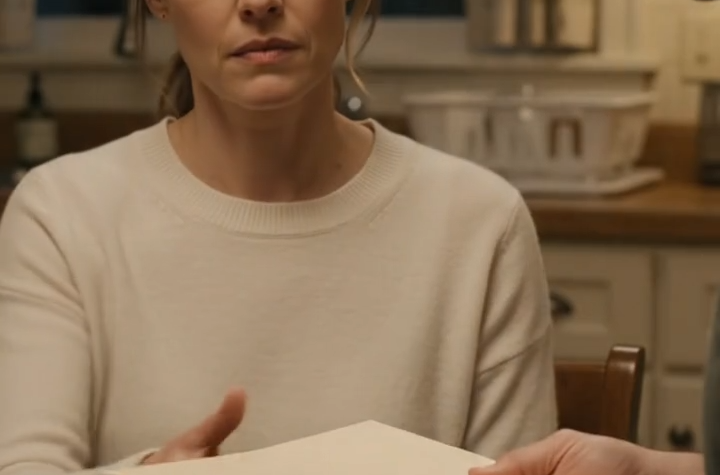
For temporary help.”
He looked toward the window.
Outside, the Christmas lights I had hung along the porch rail were still visible in the gray morning.
One section sagged slightly where I had planned to fix it before he arrived for the holiday.
For the first time, he seemed to notice them.
His expression softened for perhaps two seconds.
Then his phone buzzed in his pocket and the softness disappeared.
He ignored the call.
“Can you at least reopen them until after Christmas?”
There it was again.
Not a conversation about repayment.
Not a question about what I needed.
A request for continued access, presented as though a calendar date should override everything I had learned.
“No.”
The word came out quietly.
He blinked.
I realized then how rarely I had said it to him without immediately explaining myself.
“No?”
“No.”
“What am I supposed to tell my wife?”
“The truth.”
His chair scraped backward.
“What truth, exactly?”
“That the accounts belonged to me, I had allowed you to use them, and I have ended that arrangement.”
He looked toward the phone.
The attorney remained silent.
My son lowered his voice.
“You’re making me look irresponsible.”
I felt something inside me settle.
“I am not discussing how you look.
I am discussing what I will be responsible for.”
He paced once across the kitchen, stopping near the counter where the tin of snickerdoodles sat unopened.
I had baked them for him two nights earlier.
He noticed the tin and looked away.
“Do you know how humiliating this is?” he asked.
That word nearly made me laugh, but there was nothing funny about it.
I thought of Thanksgiving dinner cooling on my table while I waited for a call that never came.
I thought of his single emoji two days later.
I thought of wrapping Christmas gifts for someone who could dismiss me with one sentence and still assume my financial support would remain untouched.
“I know something about humiliation,” I said.
He turned back toward me.
For once, I did not list the hurts.
I did not need him to agree that they counted.
The lawyer returned to the practical matter.
She confirmed that I had already taken the important first step by ending the access I no longer wished to provide and preserving records of the activity while the accounts were mine.
She recommended that any future financial help, if I chose to offer it at all, be clearly documented and limited.
“If,” I repeated.
My son heard the word.
His eyes narrowed.
“So that’s it? You’re cutting me off?”
“I am ending this arrangement.”
“You’re my mother.”
“Yes.”
“Mothers help their children.”
“Parents help their children grow.
They do not have to remain financially responsible for them forever.”