Ryan tried another approach.
“Because we’re family.”
“That was Brooke’s argument this morning.
Family helping family.”
“Exactly.”
“Then help.”
He had no answer.
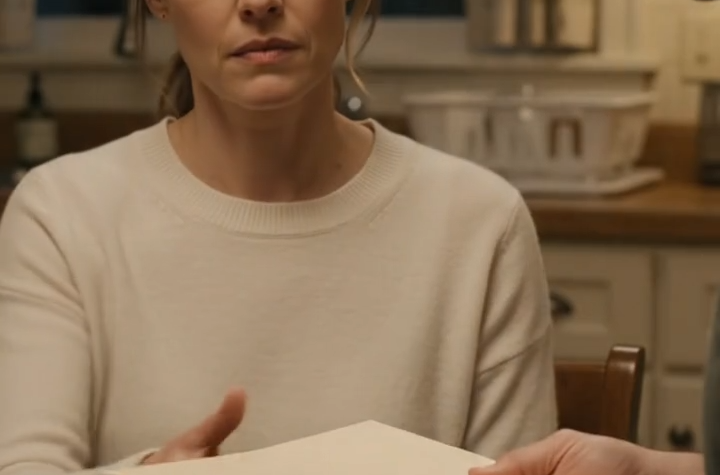
I slid the envelope with the expense breakdown across the table.
“Six hundred and fifty dollars is based on what my costs increased after you arrived.
It isn’t rent.
It doesn’t include a profit for me.
It doesn’t include anything for the rooms you’re using.
It’s a contribution toward what you consume.”
Brooke picked up the envelope but did not open it.
“And if we don’t pay?”
There it was.
The question beneath every argument we’d had.
Not whether my request was reasonable.
Whether I had the nerve to enforce it.
I met her eyes.
“Then this arrangement ends.”
Ryan’s face changed.
“What does that mean?”
“It means you find somewhere else to stay until your house is finished.”
Brooke stood so quickly that the envelope fell from her hand.
“You’re kicking out your own son because of six hundred and fifty dollars?”
“No.
I’m telling two adults that living here is no longer free if free means I pay the bills while being insulted in my own house.”
“I was joking at dinner.”
“You weren’t.”
“You can’t possibly be this sensitive.”
“This isn’t about sensitivity.”
I tapped the notebook.
“It’s about facts.”
Then I touched the deed folder.
“And boundaries.”
Brooke looked toward Ryan, waiting for him to take control of the conversation.
For the first time, he didn’t.
He stared at the floor.
I wondered if he was replaying the previous night in his head: Brooke laughing, him joining her, both of them talking about my house as if I were an inconvenient tenant occupying too much of it.
“Mom,” he finally said, “we really don’t have somewhere else lined up.”
His voice was quieter.
That was the first sentence all evening that sounded like my son rather than Brooke’s defender.
I softened my tone but not my position.
“Then you should have thought about that before treating the place keeping you comfortable as though it belonged to you.”
He rubbed both hands over his face.
“I didn’t realize you felt like that.”
“You watched her laugh at me.
Then you laughed too.”
He looked at me.
I wasn’t crying.
I think tears would have made things easier for him.
Tears could have been comforted.
They could have turned the conversation into emotion, apologies, hugs, and eventually the same behavior.
Instead, I gave him the truth.
“Yesterday you told me not to make a scene at my own dinner table.