Grief had taught me that details mattered most when powerful people hoped exhaustion would erase them.
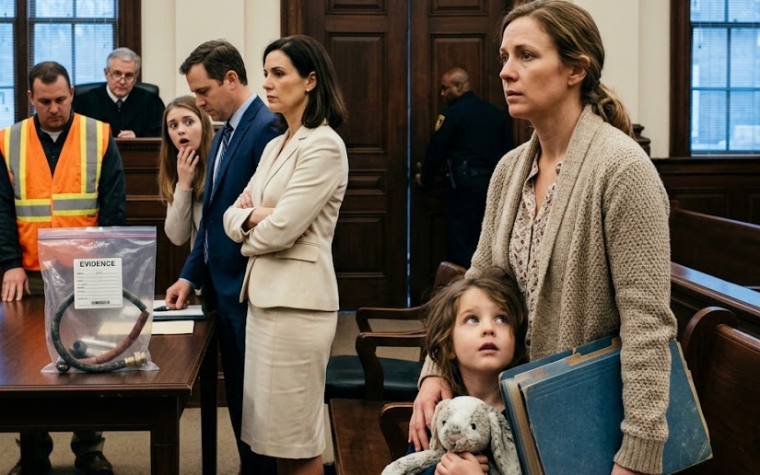
At 5:36 p.m., Sophie returned carrying a sealed evidence bag.
She looked different.
Not victorious.
Not relieved.
Older.
Inside the safe-deposit box, they had found Charles Archer’s original voting-trust revocation, signed and notarized eight weeks before his death.
They also found a handwritten affidavit explaining that Preston had pressured him to sign a temporary proxy while he was heavily medicated.
Charles had revoked that proxy the moment he understood its scope.
The document Preston later filed with the board had been dated two weeks after the revocation.
Its signature was a forgery.
The box also contained a second memory card holding the decryption key for the one hidden in the Porsche.
The forensic attorney entered the key.
A directory opened.
There were audio files, scanned ledgers, board drafts, bank instructions, and photographs of documents laid side by side.
Charles had spent the final year of his life building a record.
The first recording began with Preston’s voice.
“You don’t need to burden Sophie with this,” he said.
“She receives the economics.
I receive the control.
That protects everyone.”
Charles answered weakly but clearly.
“It protects you.”
“You’re ill, Charles.”
“I am ill.
I am not absent.”
The recording continued for eleven minutes.
Preston threatened to freeze credit lines, trigger investor withdrawals, and tell the board that Charles had become mentally incompetent.
He demanded control of the family holding company before the illness became public.
Charles refused.
The next file documented what happened afterward.
A forged voting proxy had shifted fifty-one percent of the holding company’s voting rights to a trust administered by Preston.
Once Charles died, that trust gained effective control of Archer Capital’s parent company.
Sophie had inherited wealth, a title, and a public office.
Preston had inherited the machinery beneath them.
For five years, he had approved related-party transactions through shell investment vehicles.
Management fees flowed to companies he controlled.
Losses were assigned to Archer family entities.
Profits were redirected elsewhere.
The preliminary total exceeded six hundred forty million dollars.
Sophie gripped the back of a chair as the numbers appeared.
“He told me my father changed the structure because he didn’t trust me,” she said.
The attorney paused the file.
Sophie shook her head.
“Don’t stop.”
Another recording played.
This time Charles spoke alone.
“Sophie, if you hear this, I failed to reach you before he built a wall around me.
Do not mistake access for loyalty.
Preston stayed close because closeness gave him control.
You were kept away because you were the one person I might have believed.”
Sophie covered her mouth.
No one looked away, but no one intruded on her grief.
Even Preston’s lawyer stopped taking notes.
Charles explained the Porsche.
He had trusted Gerhard Miller for decades.