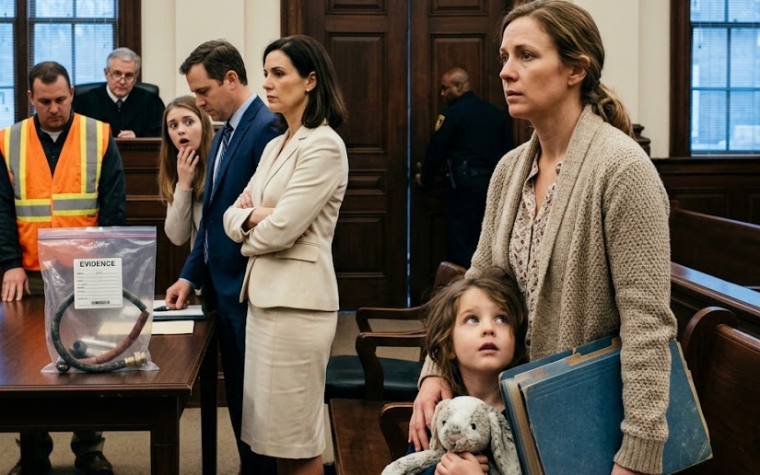
The answer was sitting twelve feet away from her.
Eleven years.
Ethan testified privately and calmly about what he wanted.
He did not say he hated Karla.
He did not ask the court to punish her.
He said he wanted to remain in the only stable home he remembered.
He said he trusted me.
He said the money came from something he created and he did not want it used as a reason to change where he lived or who made personal decisions for him.
Then he said something Mr.
Mendez later repeated to me in the courthouse hallway.
“She came after the money.
Grandma came before it.”
That sentence did more than any dramatic speech could have done.
The court did not give Karla what she demanded.
She did not receive immediate custody.
She did not receive control of the 3.2 million dollars.
The funds remained protected under structured financial oversight appropriate for Ethan’s age, with independent safeguards rather than being handed to either adult as personal property.
And after reviewing the history of care, Ethan’s wishes, Karla’s prolonged absence, and the circumstances of her return, the court left Ethan in my home while the guardianship issues were formally resolved.
For the first time in eleven years, I had what I should have obtained long before.
Legal recognition that matched the life we had actually lived.
Karla was not erased from existence.
Biology could not be erased, and the court was not interested in revenge.
She was offered a path toward rebuilding contact under conditions that respected Ethan’s comfort and choice.
But there would be no sudden takeover.
No keys to his accounts.
No moving him into a stranger’s home because that stranger happened to share his blood.
Outside the courthouse, Karla approached us.
For once, she had no lawyer beside her.
She looked at Ethan.
“I really was young,” she said.
He nodded.
“I know.”
“I made mistakes.”
Another nod.
She glanced at me.
“Your grandmother never told you how hard things were for me.”
Ethan looked at her for a long time.
“She didn’t talk badly about you.”
Karla’s face changed.
I think that hurt her more than if I had spent eleven years teaching him to hate her.
Because I hadn’t.
There had been no campaign against her.
There had simply been an empty chair where she should have been.
Karla asked, “Can we start again?”
Ethan adjusted the headphones around his neck.
“Not because of the money.”
She looked away.
“Okay.”
He did not hug her.
He did not forgive eleven years in a courthouse hallway.
He simply walked beside me toward the parking lot.
Months later, our house was quiet again.
The lawsuit papers disappeared from the kitchen table.
Ethan went back to updating his app.
I went back to cooking tamales, although now I made them because I wanted to, not because somebody else’s laundry bill depended on it.
One evening I found Ethan in the kitchen separating rice and beans onto two sides of a plate.