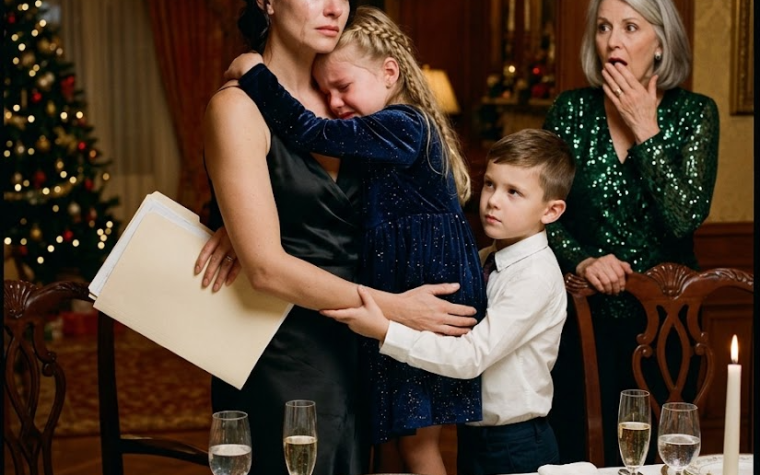
She said the child must have wandered in from a nearby encampment.
Daniel placed Maya’s brass key on the reception counter.
The attendant stared at the number 14.
“That isn’t ours,” she said.
But an identical ring of numbered brass keys hung from her belt.
The trooper asked her to turn around and keep her hands visible.
They moved past the lobby.
The donation warehouse was not empty.
The first section did contain boxes of clothing and canned food, arranged carefully enough for photographs.
Beyond those rows, however, temporary walls divided the building into narrow corridors.
Security cameras watched every intersection.
The doors had no handles on the inside.
The rooms were small but clean: cots, plastic chairs, folded blankets, bottles of water.
Nothing looked dramatic enough to alarm a donor during a scheduled tour.
That was what made it worse.
These were not rooms designed to help families rest.
They were rooms designed to prevent them from leaving.
The attendant said they were voluntary stabilization suites.
Then a woman began pounding on a door at the far end of the corridor.
“Please!” she shouted.
“Maya?”
Daniel saw the number before the trooper did.
14.
The brass key fit.
The trooper opened the door.
A woman in a gray sweatshirt stumbled into the corridor.
She was thin, exhausted, and barefoot.
A bruise darkened one side of her face, but she was standing.
She looked past both men, searching desperately.
“Where are my girls?”
The trooper told her they were alive and being taken to the hospital.
The woman’s knees gave way.
Daniel caught her elbow before she struck the wall.
Her name was Leah.
She had brought Maya and Nora to HopeBridge six days earlier after losing her apartment.
The charity’s intake worker promised a family room, emergency childcare, and help applying for housing.
Leah surrendered her phone and identification for what she was told would be a routine verification process.
The next morning, staff separated her from the children.
They told her Maya had accused her of neglect.
They told Maya her mother had abandoned them.
Neither statement was true.
HopeBridge employees pressured Leah to sign a temporary custody agreement.
When she refused, they moved her to the warehouse.
She was allowed supervised visits with Nora but not Maya, because Maya kept asking questions the staff did not want answered.
Leah discovered the truth when an exhausted employee left a records-room door open.
HopeBridge had been reporting mothers and children as separate emergency cases.
A single family of three became three rescued clients in donor reports.
Children with living parents were classified as abandoned or unaccompanied, allowing the charity to claim additional grants and reimbursements.
Mothers were portrayed as unstable, missing, or dangerous.
Some were pressured into signing custody forms they did not understand.
Others were threatened with permanent separation if they complained.
Leah found a file with Maya’s name on it.
The document stated that Maya and Nora had been discovered without a parent and brought to safety by a HopeBridge outreach team.
The date on the form was that very morning.
Leah was locked in room fourteen after she threatened to call the police.
Maya learned where she was from a frightened kitchen worker.