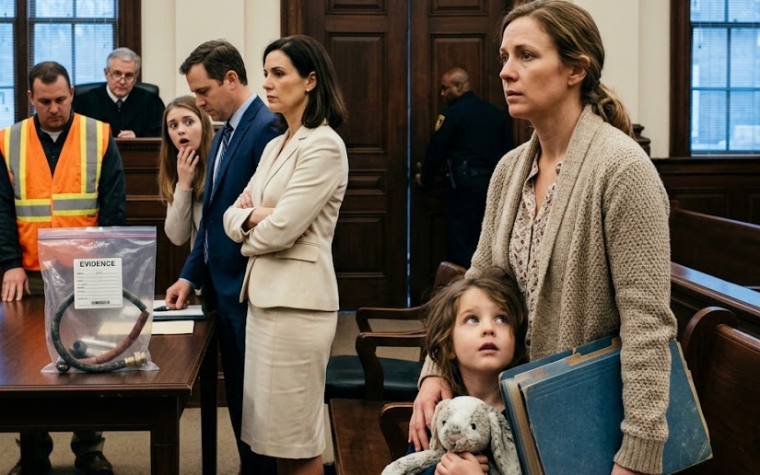
The judge asked Isabella why she had waited until Daniel was seventeen.
Isabella’s answer was less polished than the one her lawyers had presented.
She explained that after leaving the baby, she had lived for years under the authority of a family that treated the birth as something to bury.
By the time she became financially independent, shame had hardened into fear.
“Every year I waited made the next year worse,” she said.
“Eventually I convinced myself he must have a good life and that appearing would only damage it.
Then I began searching.
When I learned he was safe, I was relieved.
And then I made another mistake.
I saw how much time I had lost and tried to recover it all at once.”
The judge asked, “Did Daniel ever tell you he wanted to live with you?”
Isabella’s eyes closed briefly.
“No.”
“Did he ever tell you he wanted Mrs.
López removed from her parental role?”
“No.”
“Before filing this action, did you ask him what arrangement he wanted?”
A long pause.
“No.”
Her own answers did more damage to her custody request than anything I could have said.
The case was not resolved that afternoon.
The judge ordered updated reports and a private interview with Daniel without either side present.
Those days were the longest of my life.
Isabella’s legal team stopped speaking to the press.
The cameras still gathered outside the courthouse, but the performance inside had changed.
No one talked anymore about transferring Daniel immediately into a luxury residence.
The question became whether forcing a nearly adult boy away from the woman who had raised him could possibly serve his welfare merely because another woman had established biological maternity and greater financial resources.
The final hearing came three weeks later.
Daniel sat beside me wearing the same dark jacket he used for school ceremonies.
He had insisted on choosing it himself.
Isabella arrived with only one lawyer.
No assistants followed her.
When she entered, she looked toward Daniel but did not approach.
That mattered to him.
He noticed.
The judge reviewed the evidence carefully.
She acknowledged Isabella’s biological relationship and the credibility of her account that fear and family pressure had shaped her actions as a teenager.
She also made clear that regret did not create an automatic right to uproot Daniel seventeen years later.
The court gave substantial weight to his age, his consistent wishes, his established home, his emotional bond with me, and the professional assessment that an involuntary transfer would be disruptive rather than beneficial.
The request to remove Daniel from my care was denied.
He would remain with me.
The judge also left room for voluntary contact with Isabella, provided it respected Daniel’s wishes and progressed without coercion.
I heard the decision, but for a moment I couldn’t process it.
Daniel grabbed my hand.
Only then did I understand that my fingers were shaking.
Isabella sat perfectly still.
Her lawyer whispered to her, probably explaining options, appeals, next steps.
She listened for several seconds.
Then she shook her head.
Outside the courtroom, she approached us alone.
Daniel stiffened beside me.
Isabella stopped several feet away.
“I’m not going to appeal,” she said.
Daniel studied her face.
“Why?”
She gave a small, painful smile.