At first they met once every few weeks.
Sometimes he came home curious.
Sometimes angry.
Sometimes quiet.
She told him about relatives he had never met and parts of his history I could never give him.
He told her about school, football, and the years she had missed without pretending those stories belonged to her.
She offered money for his education once.
Daniel told her he would consider help only if it came without conditions.
She agreed.
That, more than any expensive promise in court, convinced me she might actually be learning how to know him.
Months later, on Daniel’s eighteenth birthday, we ate dinner in our apartment.
There was no grand party.
Just food, music, neighbors dropping by, and a cake slightly tilted because I had carried it home badly.
Isabella had been invited for the final hour.
Not by me.
By Daniel.
When she arrived, she brought one small wrapped box.
Daniel opened it.
Inside was a simple silver keychain with no engraving.
No car keys.
No hotel logo.
No extravagant gesture.
Just a gift.
“I almost bought you something ridiculous,” she admitted.
Daniel laughed.
“I figured.”
“Then I thought you might tell me off again.”
“Probably.”
I watched them both smile.
There was still grief between them.
There probably always would be.
Forgiveness did not rewrite the hallway.
Money did not replace the nights she had missed.
Biology did not erase me, and my love did not erase her.
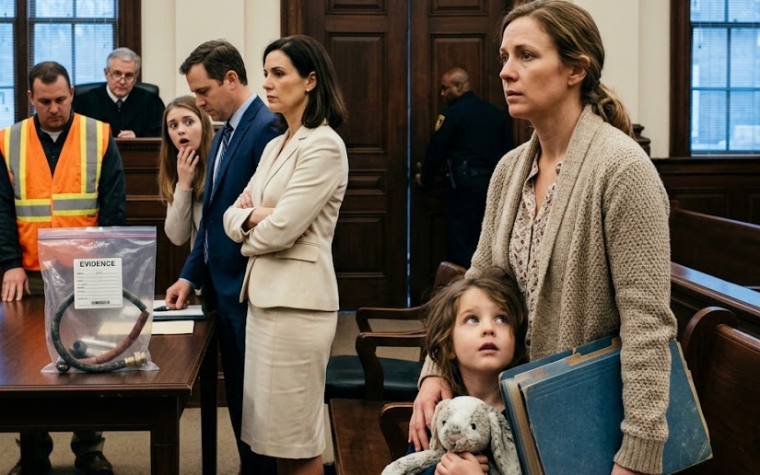
The courtroom had tried to reduce our family to competing claims: the woman who gave birth to him and the woman who raised him.
Daniel refused that argument.
He chose his home without denying his history.
Later that night, after everyone left, I found the old note on the kitchen counter.
Daniel had placed it inside a new envelope for safekeeping.
I asked whether he wanted me to put it back with his documents.
He shook his head.
“No.
I’ll keep it.”
I must have looked worried, because he smiled.
“It doesn’t hurt the way it used to.”
I touched the envelope.
“What does it mean now?”
Daniel thought for a moment.
“It means somebody left me.”
Then he looked around our small kitchen—the scratched table, the crooked birthday decorations, the stack of university forms, the home where he had grown from a freezing infant into a young man capable of speaking for himself.
“And then somebody stayed.”
That was the answer the courtroom had been trying to find all along.