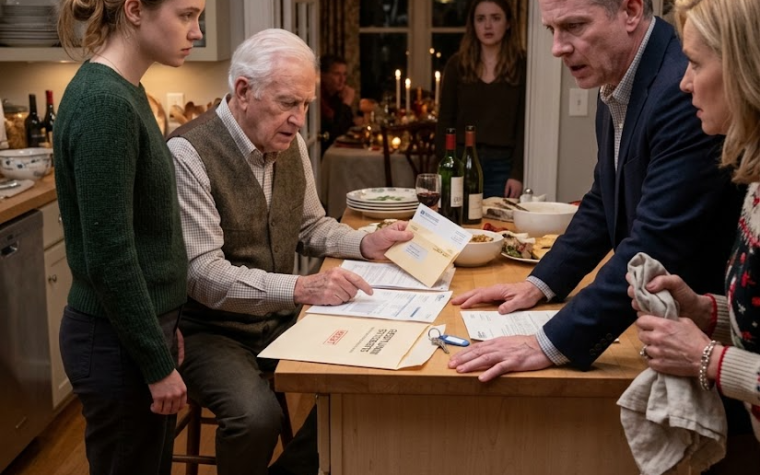
“We came here to discuss a family matter,” she said.
“There was no need to involve a lawyer.”
“You brought six people into my home to pressure me into surrendering my marriage and my property,” I replied.
“You made it a legal matter.”
“We were trying to keep the peace.”
“No.
You were counting on my silence.”
Her expression hardened.
“You work all day.
You never gave Adrian the family he wanted.
Now there is a baby involved.
A decent woman would think about the child.”
There it was again—the accusation they had prepared before entering my house.
My career was selfish.
My childlessness was a failure.
Adrian’s affair was an unfortunate event that I was expected to solve by disappearing.
I felt the old instinct to defend myself rise in my chest.
For years, I had explained my hours, apologized for missed dinners, and accepted criticism for helping pay the bills everyone enjoyed.
This time, I did not explain anything.
“The child is innocent,” I said.
“That does not make Adrian innocent.
And it does not make my house yours.”
Adrian’s father finally lifted his head.
“Perhaps we should all calm down,” he murmured.
Adrian’s sister turned toward him.
“Dad, she’s humiliating us.”
I almost laughed.
They had entered my home with my husband’s pregnant mistress and ordered me to leave, yet they believed the humiliation began when I showed them the deed.
My lawyer asked me to remove the third document.
It was a formal notice confirming that Adrian’s continued use of the property would be addressed through the divorce proceedings.
It also instructed him not to remove, sell, damage, or conceal anything belonging to me.
Adrian read the first lines and slammed his palm against the table.
“You planned this.”
“Yes,” I said.
The answer seemed to shock him more than anger would have.
He had expected tears.
He had expected pleading.
Perhaps he had imagined I would bargain for his affection while his family watched.
He had not expected preparation.
The truth was that I had contacted a lawyer the morning after Adrian confessed.
I had barely slept that night.
I sat on the edge of our bed listening to him breathe, wondering how many times he had returned from another woman and climbed beside me as though nothing had happened.
Before leaving for work, I photographed the deed and every property document in the house.
During my lunch break, I met the lawyer recommended by a colleague at the bank.
She listened without interrupting.
Then she asked one question.
“Do you want to save the marriage, or do you want to protect yourself while you decide?”
I did not know whether the marriage could be saved.
But I knew I needed protection.
That was why the folder was ready when Adrian announced that his family would be visiting to “discuss arrangements.” His choice of words warned me that the decision had already been made without me.
My lawyer advised me not to argue, threaten, or reveal what I knew too early.
She stayed connected to the call so there would be a precise record of the pressure they placed on me.
The legal value of the recording would depend on the rules governing the case, she explained, but it would still preserve what was said and prevent them from rewriting the meeting later.
Now that precaution was dismantling their confidence sentence by sentence.
Adrian pointed toward the phone.
“You trapped us.”