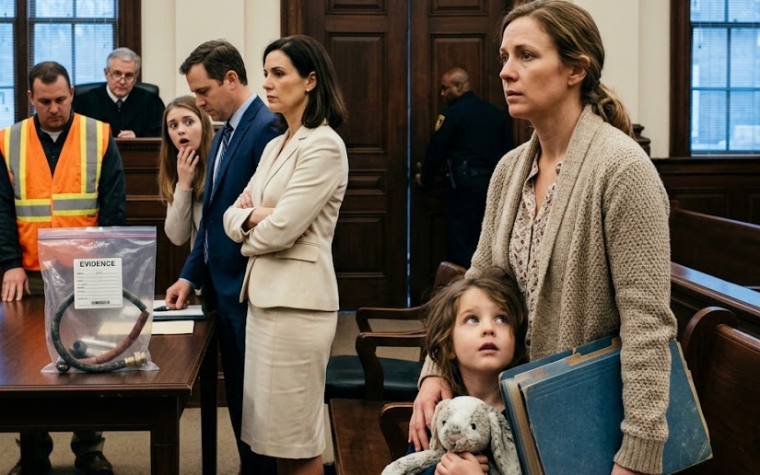
“You plan to raise a child while publicly attacking the father? What kind of mother does that?”
“The kind who refuses to teach her child that love requires accepting humiliation.”
For the first time, Diane had no immediate answer.
The investigation began that morning.
None of the Whitmores were dismissed on my command.
I insisted on an independent review by outside counsel because I would not allow them to claim that a wounded former daughter-in-law had manufactured the outcome.
Their company accounts were preserved.
Their email access was restricted.
Finance recovered Grant’s deleted requests and found that he had contacted two junior employees directly after compliance denied him the partnership schedules.
He had suggested that helping him would be remembered during promotion season.
One employee had refused.
The other had sent him a partial index before becoming frightened and reporting the exchange.
Vanessa’s messages revealed that she had encouraged Grant to search for my name through vendor databases.
She referred to me as “the quiet liability” and wrote that any connection I had to the partnership should be removed before the divorce announcement.
Richard had not initiated the plan, but he had approved a consulting payment intended for an outside intermediary who promised to identify hidden beneficiaries.
Diane held no operational role, yet she had used her influence over the family to coordinate the pressure.
Her messages were the cruelest.
She repeatedly told Grant that I would never fight back because women without money could not afford principles.
The evidence did not show a completed theft.
It showed an organized attempt that failed because the people involved overestimated their status and underestimated the controls around them.
Grant’s attorneys attacked the recording first.
They argued that the dinner had occurred in a private home and that everyone expected confidentiality.
My legal team established that the jurisdiction permitted a participant in the conversation to record it.
More importantly, the recording was not the only evidence.
It clarified intent behind requests already preserved in corporate systems.
Then his attorneys attacked me.
They claimed I had concealed my identity to provoke misconduct.
They suggested my marriage had been an experiment.
They hinted that I had allowed the Whitmores to mistreat me so I could later punish them.
That argument collapsed under dates.
I had married Grant before he joined the executive division that handled the Asteron partnership.
I had supported his career without influencing his promotions.
I had disclosed my holdings fully during the confidential divorce process.
He had signed acknowledgments prepared by his own lawyer without reading the schedules because, as he admitted during questioning, he assumed anything belonging to me was insignificant.
His contempt had done what deception never could.
It had blinded him to information placed directly before him.
Three weeks after the boardroom meeting, the independent committee delivered its findings.
Grant was terminated for cause based on attempted unauthorized access, misrepresentation, retaliation pressure against junior employees, and breach of fiduciary obligations.
Vanessa was terminated for participating in the effort and using internal databases for an improper personal purpose.
Richard resigned before the final vote, but the company reported the relevant transactions to its auditors and regulators.
Diane lost the advisory privileges she had enjoyed through her family’s influence.
Her building access was revoked, her invitations disappeared, and the executives who once laughed too loudly at her jokes stopped returning her calls.
Whitmore Global itself was not destroyed.
Thousands of employees had done nothing wrong, and I refused to punish them for the family’s conduct.
Asteron restructured the partnership, replaced the conflicted leadership, and protected the workers whose livelihoods depended on responsible decisions.
That choice enraged Diane more than revenge would have.
She wanted to portray me as emotional and reckless.
Instead, I preserved the business while removing the people who believed it was their inheritance.
Grant contacted me repeatedly after his dismissal.
His first messages were angry.
Then came bargaining.
He said he had been under pressure from his mother.
He said the documents were only a precaution.
He said couples made mistakes during difficult separations.
Finally, he asked to meet because he wanted to be present for the baby.
I agreed to communicate through our lawyers and a family counselor.