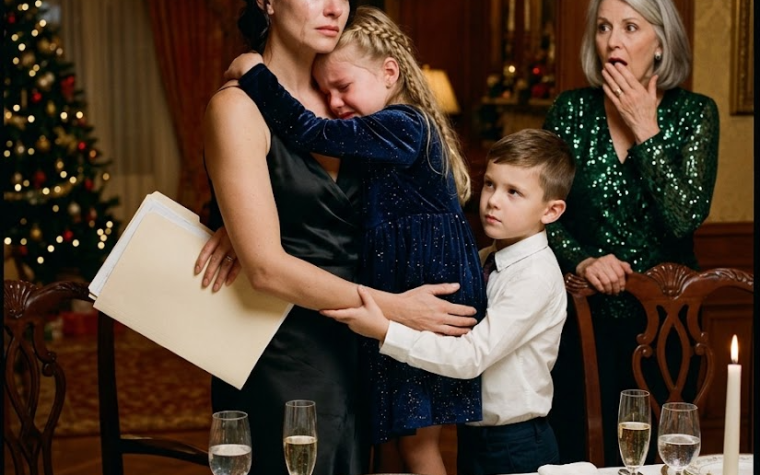
He squeezed my shoulder once before leaving.
When the house was finally quiet, I carried the cardboard box upstairs.
I removed the replacement towels one by one and stacked them on the floor.
Then I put the cream towels back where they belonged.
Not because embroidery determines who owns a home.
Not because initials are magic.
But because those towels had been chosen by my mother, and someone had tried to erase them while expecting me to stand there and accept it.
I wasn’t going to.
The next weeks were less cinematic.
They were meetings, statements, passwords, account reviews, lawyers, and difficult conversations.
Preston’s access to the household account ended at midnight exactly as Miles said it would.
Charges he attempted afterward were declined.
The lake-house locks were changed.
The spare keys his family had accumulated over the years stopped working.
When the financial records were reviewed, the linen order became one item among several expenses Preston had treated casually because he assumed my resources were permanently available to him.
The receipt mattered because it was concrete.
It carried the order, the instruction, and the payment trail in one humiliating little page.
But the larger betrayal had never been about towels.
It was about entitlement.
Preston believed my silence meant consent.
Evelyn believed hospitality meant ownership.
Sloane believed a stitched surname could make a future inevitable.
And I had spent too long believing that keeping peace was the same as preserving dignity.
It wasn’t.
By the end of summer, Preston and I were living separately while our attorneys handled what came next.
I kept the lake house because there was never a legitimate dispute over its title.
The financial accounts tied to my family assets remained under my control.
Evelyn sent me one long message accusing me of destroying the family.
I did not answer.
A family that requires one woman to accept public humiliation in order to remain intact is already broken in the places that matter.
Sloane never came back to the house.
Months later, through the strange channels by which news travels, I heard that she and Preston had not lasted.
I did not celebrate.
By then, their relationship had stopped being the center of my life.
That was the consequence neither of them seemed to anticipate.
I moved on without needing their collapse to prove my recovery.
The following Fourth of July, I returned to the lake house alone two days before my guests arrived.
I opened the linen closet.
Cream towels sat in clean stacks.
My mother’s small blue C was still stitched near the hem.
I ran my thumb over one of them and remembered the woman who had chosen every detail in that house because she believed ordinary things deserved care.
Then I went downstairs and set the table myself.
No one sat at the head.
No one needed to.
When headlights eventually came up the gravel drive, they belonged to people I had invited because I wanted them there.
That distinction felt larger than any deed Miles had placed on the table.
Ownership had been the fact that saved me that night.
But dignity came from something else.
It came from finally understanding that I did not have to beg anyone to respect what was already mine.