“No.”
My mother began to cry, but even then she cried carefully, wiping each tear before it reached her makeup.
“We were desperate,” she said.
“Your father’s investments collapsed.
Lydia’s company was about to lose everything.
We only intended to borrow it.”
“You emptied the account while Grandpa was in intensive care.”
“We would have replaced it.”
“With what?”
She looked toward my father.
He did not answer.
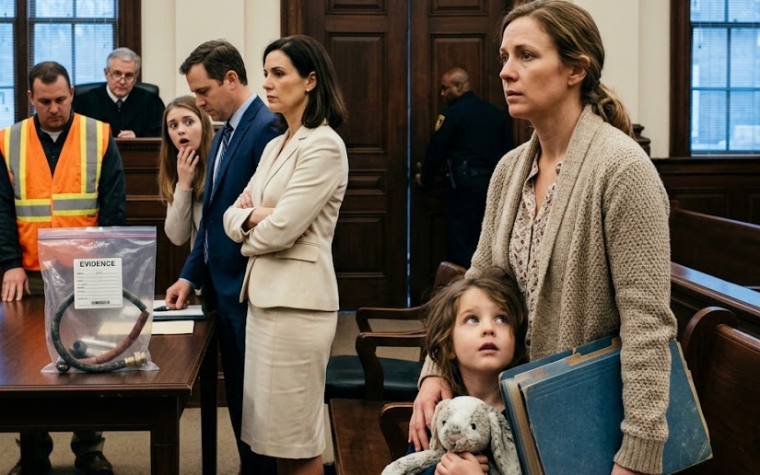
The attorney finally opened the blue folder.
Inside were copies of account records, notarized statements, and a document bearing Grandpa’s familiar slanted signature.
The text blurred as my eyes filled, but I refused to blink until I understood what I was seeing.
Three weeks earlier, my parents had visited Grandpa at home without telling me.
According to his statement, they asked him to transfer his house to my father and name Lydia as beneficiary of his remaining investments.
They said it was time for him to stop allowing me to control him.
When Grandpa refused, my father threatened to have him declared incompetent.
Grandpa called his attorney the next morning.
He revoked every old power of attorney my parents might still possess.
He confirmed that I alone could make his medical decisions.
He also signed a declaration describing their threats and instructed his attorney to contact the bank if anyone attempted to interfere with the money reserved for his treatment.
My father laughed, but there was no humor in it.
“An old man signed papers while he was medicated.
That proves nothing.”
The attorney pulled another sheet from the folder.
“His physician evaluated him the same day.
Harold was fully competent.”
My father’s jaw shifted.
The key remained on the table between us.
“What does that open?” Lydia asked.
The attorney looked at me.
“A safe-deposit box held jointly by Claire and Harold.
Harold placed the original documents there, along with records of every attempt your family made to pressure him.
He hid the key in the watch because he believed nobody else knew Claire carried it.”
Grandpa had known.
Not every detail, perhaps.
Not the exact night or the exact amount.
But he had known the people who called themselves his children might see his illness as an opportunity.
He had been protecting me while I thought I was protecting him.
My father reached for the folder.
Security moved before his fingers touched it.
“Step back, sir.”
He pulled his hand away.
“You have no authority here.”
The surgeon entered the room.
“I do,” he said, “and this family’s conduct is disrupting an intensive-care unit.
Harold Thompson requires a decision now.
Anyone who is not his authorized medical representative will leave.”
Every face turned toward me.
The surgeon held out the consent forms.
My hands trembled as I signed, but my signature remained legible.
“Proceed,” I said.
My father scoffed.
“With what money?”
The attorney took out his phone.