“Probably.”
A few weeks later, a password I knew no longer worked.
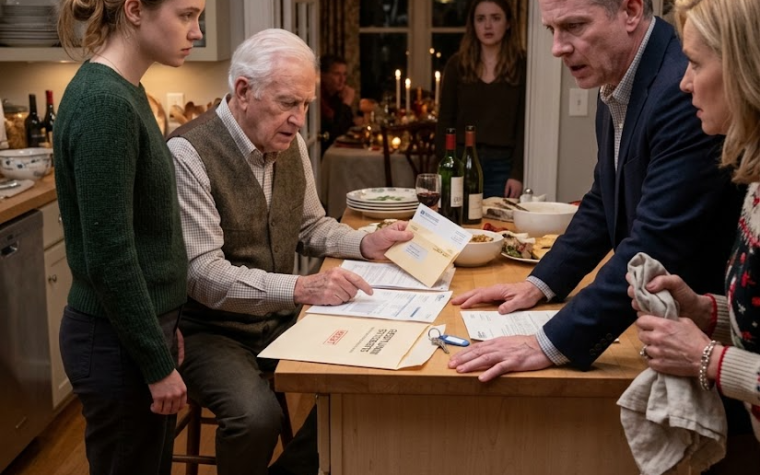
Then I noticed a transfer on paperwork that had been left with other household documents.
The amount itself was not extraordinary for a wealthy family.
What caught my attention was the timing and the account reference.
I wrote down the date.
After that, I began keeping records.
Not because I had already decided to divorce Trevor.
I had not.
Part of me was still trying to save the marriage.
I collected them because the numbers were changing while Trevor’s behavior was changing, and I had spent too many years as an accountant to pretend coincidence was an explanation.
In court, those quiet months of observation finally mattered.
My attorney did not accuse Trevor of something she could not prove.
She simply walked through the discrepancies.
One disclosed figure.
One official statement.
One transfer date.
Then another.
Trevor’s attorney repeatedly asked for context.
My lawyer repeatedly agreed.
“Yes,” she said.
“We would like the context too.”
That answer irritated Trevor more than an accusation would have.
He wanted a fight he could call emotional.
Instead, he got arithmetic.
Eventually the court ordered broader financial disclosure so the disputed accounts and transfers could be properly examined.
That was the moment the Hayes family’s polished version of the divorce began to crack.
Outside the courtroom, Diane came toward me before my lawyer could guide me away.
“You had no right to collect our private family information.”
Her voice was low and controlled, the same voice she had used when correcting table settings or telling me how Trevor preferred his shirts arranged.
I shifted my sleeping son higher against my shoulder.
“I kept records of financial information I was allowed to see while I was living there.”
“You photographed things that were none of your concern.”
“My marriage was my concern.”
Her mouth tightened.
Trevor appeared behind her.
For a moment nobody spoke.
Then he said, “You planned this.”
That almost made me laugh.
I looked at him.
“You asked me for a divorce while I was holding our baby and cooking breakfast for your family.
You planned that morning.
I planned to understand what was happening around me.”
His eyes hardened.
“You’re trying to make my family look dishonest.”
“No, Trevor.
I’m asking the records to be complete.”
My lawyer touched my elbow and we walked away.
The next weeks were exhausting.
Trevor stopped treating me like a woman too weak to challenge him.
Every communication became more formal.
Every request passed through attorneys.
Questions that had once been brushed aside now required answers.
The additional records did not reveal some theatrical hidden vault or single magical document.
They revealed something more believable and, for Trevor, more damaging: a consistent effort to present our marital financial circumstances as smaller and simpler than the underlying records showed.
Transfers among accounts connected to Trevor and his family had to be explained.