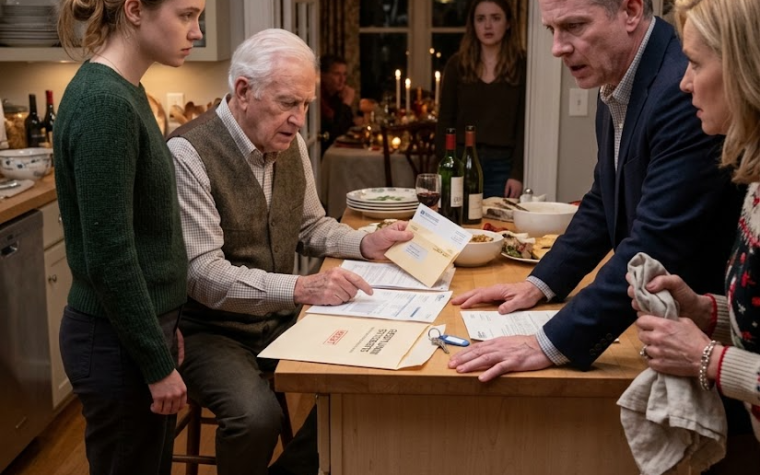
Funds moved during the period leading up to the divorce had to be traced.
Values that had been summarized broadly now had to be supported with documentation.
The family that had always relied on presentation was being forced into detail.
And detail was where their confidence failed them.
Trevor tried several explanations.
Some transfers, he said, were routine.
Others involved family obligations.
Some accounts, he argued, were not really his despite transactions connected to him appearing in the records.
My attorney did not need to prove that every transfer was improper.
She needed to establish what belonged in the full financial picture and whether Trevor’s earlier disclosures had been complete.
The forensic review did the rest.
The official records confirmed that significant financial activity had occurred during the months when Trevor was withdrawing from me personally and restricting my access to information.
Several items required correction or fuller disclosure before the divorce could proceed fairly.
That mattered because Trevor’s original posture had depended on one assumption: that I would not know enough to challenge the numbers.
He had mistaken being out of the workforce for being incapable.
He had mistaken exhaustion for inattention.
And his family had mistaken obedience for ignorance.
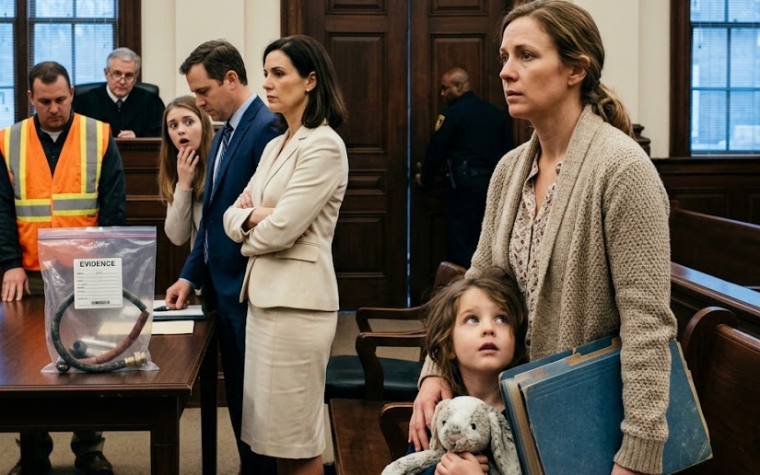
During another hearing, Trevor’s attorney attempted to return attention to the morning I left the estate.
His argument was careful, but the implication was clear.
I had packed a suitcase and removed our baby from the home.
My lawyer asked me to describe what happened.
So I did.
“At approximately 4:30 in the morning, Trevor came into the kitchen.
I was holding our two-month-old son and preparing breakfast.
He said one word: ‘Divorce.’ I turned off the stove, packed necessities for the baby and myself and left.”
“Did you leave because you intended to deprive Trevor of his child?”
“No.”
“Why did you leave?”
“Because my husband had just ended our marriage without discussion while I was holding our newborn, and I needed a safe, stable place to think.”
I explained that I had gone to Ruth’s house.
Ruth later confirmed what she had seen that morning: a tired mother, one suitcase, an infant and no plan except getting through the next few hours.
The image Trevor’s side wanted—the impulsive wife abandoning the marital home—did not survive contact with the ordinary details.
Neither did the suggestion that I had contributed little to the marriage simply because I had not recently brought home a corporate salary.
My years inside the Hayes home had value even if nobody had paid me for them.
I had cared for our child.
I had managed large portions of the household work expected of me.
I had structured my life around Trevor’s promises and the family’s demands.
The divorce did not transform those facts into nothing.
Meanwhile, the financial dispute continued narrowing.
Once complete documentation was available, the numbers became much harder to argue with.
Trevor had to revise parts of the financial picture his side originally presented.
Assets and transactions that had not been adequately reflected were brought into the accounting process.
The court made clear that full disclosure was not optional simply because money moved through a complicated family structure.
I watched Trevor absorb that reality from across the room.
He no longer smiled at me.
Diane stopped attending every proceeding.
When she did appear, she sat farther back.
There was no spectacular public collapse of the Hayes name.
Their business plaques did not fall off walls.
Charity invitations did not burst into flames.
What changed was more personal.
Inside the one room where reputation could not substitute for records, the family’s preferred story lost its power.
Trevor was not automatically the responsible one because he wore an expensive suit.
I was not automatically the helpless one because I had arrived at Ruth’s house with a diaper bag and one navy suitcase.
The evidence forced everyone to deal with what could actually be documented.
In the end, the divorce was resolved using a corrected and much fuller understanding of our finances than Trevor had apparently expected when he first asked me to leave his life.