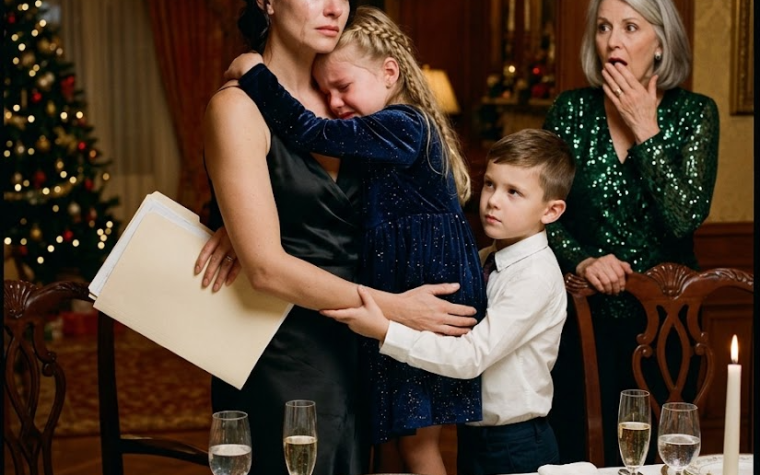
No Eleanor.
The result matched the original: 99.99 percent probability of paternity.
This time, Julian read every page.
He signed the acknowledgment establishing Lily as his daughter.
He agreed to financial support placed under independent management for her education, health, and future.
He also accepted a gradual visitation schedule because I would not allow guilt to rush him into a role that required patience.
Eleanor challenged the laboratory documents until investigators confirmed the payment trail and delivery interference.
She claimed she had acted to protect her son from fraud, but the preserved authorization, courier record, and her own statements at the wedding told a different story.
She lost her position overseeing the family foundation and was removed from decisions involving Julian’s private affairs.
The Sterling name survived, but her control over it did not.
Julian came to my apartment several weeks later for his first supervised visit.
He sat on the floor in an expensive suit while Lily studied him with solemn dark eyes.
When she reached for his finger, he began to cry.
“I missed everything,” he whispered.
I stood nearby, watching him hold the weight of what his silence had cost.
“You missed eight months,” I said.
“You do not have to miss the rest.”
He looked up at me.
“Is there any chance for us?”
I had once dreamed of hearing that question.
By then, I understood that love without courage was another form of abandonment.
“There may be a chance for you and Lily,” I said.
“That is the relationship you need to earn.”
He nodded, devastated but respectful.
For the first time since our marriage ended, he did not ask me to carry the consequences of his choices.
Months passed.
Julian learned how Lily liked her bottle warmed, which song calmed her, and how she rubbed the tiny birthmark beneath her ear when she was tired.
He attended appointments.
He arrived when he said he would.
He stopped asking for forgiveness and started behaving like a man who understood why forgiveness could not be demanded.
I never returned to the Sterling estate.
I did not need their approval, their wealth, or their version of respectability.
The day I entered that wedding courtyard, Eleanor believed my plain dress made me powerless.
She believed the guests would see a desperate former wife carrying a baby and asking for money.
What they saw instead was a mother who had preserved the truth when everyone with power wanted it buried.
I had not gone there to ruin a wedding.
I had gone there to restore my daughter’s name.
And when I walked away with Lily asleep against my heart, I no longer felt erased.