She released it.
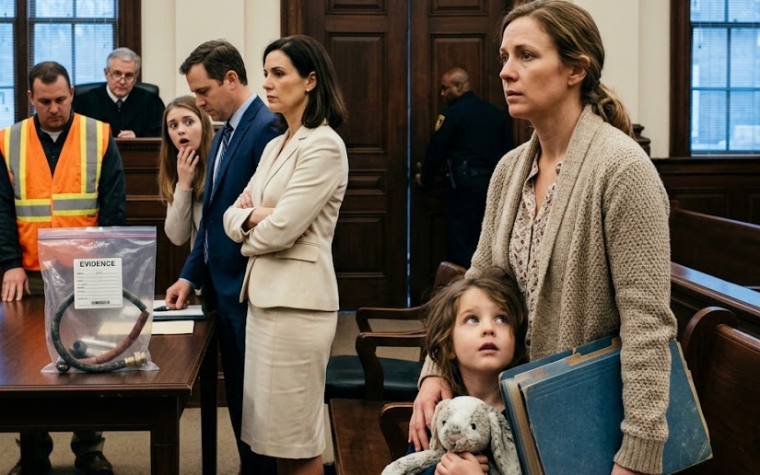
The bailiff carried the folder to the clerk’s table and placed it inside an evidence bag.
Judge Graves sat.
“The tribunal will resume.”
Ethan opened his mouth.
Graves raised one hand.
“No, Mr.
Pierce.
You have spoken extensively.
You will listen now.”
The room became perfectly still.
Graves lifted the first document from my file.
“This is a certified admission order issued under the respondent’s prior legal name.
I have independently confirmed the seal and docket reference through the court’s internal system.”
He raised the second document.
“This is an order recognizing her continued professional use of the surname Phillips following dissolution of marriage.”
Then the third.
“And this is direct confirmation from the Office of Attorney Admissions that Bella Phillips has remained licensed and in good standing throughout the six-year period alleged in your complaint.”
Ethan’s face tightened.
“With respect, Your Honor, the public database showed—”
“I know what the public database showed.”
Graves’s voice was quiet enough that Ethan stopped speaking.
“The question before me now is why it showed it.”
He opened the clear evidence sleeve.
The forensic report had taken weeks to obtain.
After Ethan filed his complaint, I had asked for preservation of the registry logs before anyone could overwrite them.
The public page made it appear that my license number belonged to a deceased attorney.
The underlying internal record did not.
Someone had altered what the public-facing system displayed.
The report documented when the change occurred.
It identified the tribunal records workstation used to access the entry.
It identified the credentials used during the modification.
And it preserved the request trail connecting the change to materials transmitted on behalf of Ethan’s firm.
Graves read the relevant portion into the record without dramatics.
That made it worse.
Ethan interrupted before he finished.
“Anyone can send a request to an office using a firm’s name.”
Graves looked up.
“That is true.”
For half a second, Ethan seemed relieved.
Then Graves continued.
“Which is why the supporting metadata matters.”
The relief vanished.
My father shifted in his chair.
My mother stared at the evidence bag holding the red folder.
Graves moved to the sworn statement.
Six weeks earlier, a nurse from my father’s clinic had come to my office with copies of internal records.
She claimed patient complaints had been settled quietly, that certain settlement amounts were being routed through an escrow arrangement, and that documents had been changed after signatures were obtained.
I had not accepted those claims as fact simply because she was frightened.
I checked what could be checked.
That was how I found the transfers passing through an escrow account administered by Ethan’s firm.
When I asked Ethan about them privately, he told me they were confidential family business and advised me to stop digging.
When I refused, the pressure began.
The nurse vanished for thirty-six hours.
My office was searched.
Then Ethan filed a complaint accusing me of being a fake lawyer.