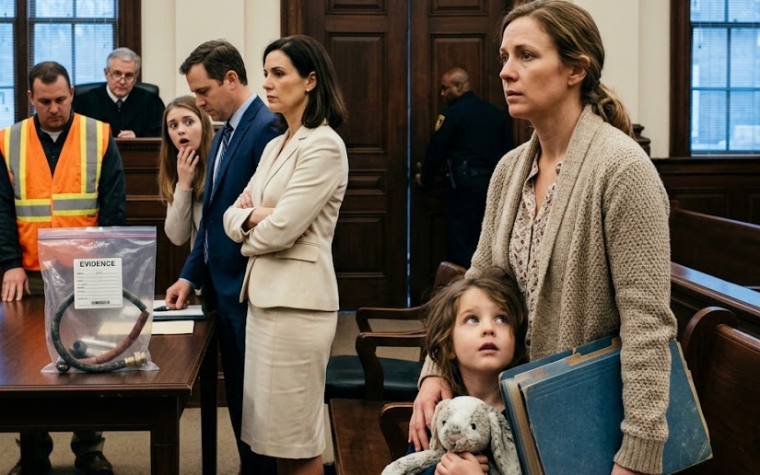
Graves continued.
“The tribunal is referring the evidence concerning registry modification, the affidavit, and counsel’s conduct for independent investigation.
Mr.
Pierce’s conduct will also be transmitted for review under the professional rules governing dishonesty, misuse of process, and interference with the administration of justice.”
Ethan went pale.
“You can’t discipline me based on accusations my sister manufactured.”
“No one has disciplined you tonight,” Graves said.
“Evidence has been preserved and referred.
You will receive process.”
That distinction mattered.
It was also more terrifying to Ethan than an angry speech would have been.
He had come expecting a family performance where confidence could substitute for proof.
Instead, every step from that moment forward would belong to people he could not charm over dinner.
The Attorney General’s office took custody of copies of the preserved materials.
The tribunal secured the originals.
Access logs were frozen.
The records supervisor’s affidavit was referred for examination alongside the garage photograph and system data.
My father’s clinic was notified separately that relevant records could not be destroyed or altered while the underlying allegations were reviewed.
No one was marched out in handcuffs.
There was no theatrical confession.
Real consequences began with quieter things.
Passwords disabled.
Files preserved.
Questions asked under oath.
People suddenly needing their own lawyers.
Ethan’s professional conduct became the subject of a separate disciplinary process.
His firm could no longer treat the escrow transfers as a private family matter once investigators demanded the supporting records.
My father’s clinic faced scrutiny over the whistleblower allegations and the handling of patient settlements.
My mother’s role was examined too, although the evidence distinguished between being present, helping carry documents, and actually knowing the full purpose of the scheme.
That distinction mattered to me even then.
I wanted facts, not revenge.
The nurse who had first come to my office received protection through the investigation and gave her account through formal channels instead of hiding behind locked doors and shaking hands.
And the false public registry entry was corrected.
For months afterward, people asked me why I hadn’t defended myself immediately when Ethan first accused me.
The answer was simple.
I had defended myself.
I just hadn’t done it in the language my family expected.
They expected shouting because shouting could be called hysteria.
They expected pleading because pleading could be called guilt.
They expected me to argue every insult because then Ethan could make the argument itself the story.
Instead, I preserved the logs.
I obtained the certified admission record.
I documented the surname order.
I protected the whistleblower statement.
I followed the money.
And when Ethan finally put me in a room where evidence mattered more than family hierarchy, I handed the evidence to the person with authority to read it.
Weeks after the hearing, I returned to the same tribunal building for an unrelated professional matter.
The fluorescent lights still buzzed.
The oak veneer was still dull.
The air still smelled faintly of lemon polish and old paper.
Nothing about the room looked different.
I did.
For most of my life, I had thought dignity meant surviving whatever my family said about me without letting them see the damage.
That night taught me something else.
Dignity could also mean refusing to perform innocence for people committed to misunderstanding you.
Sometimes it meant documenting the truth carefully enough that when the right door finally opened, you didn’t need to raise your voice at all.