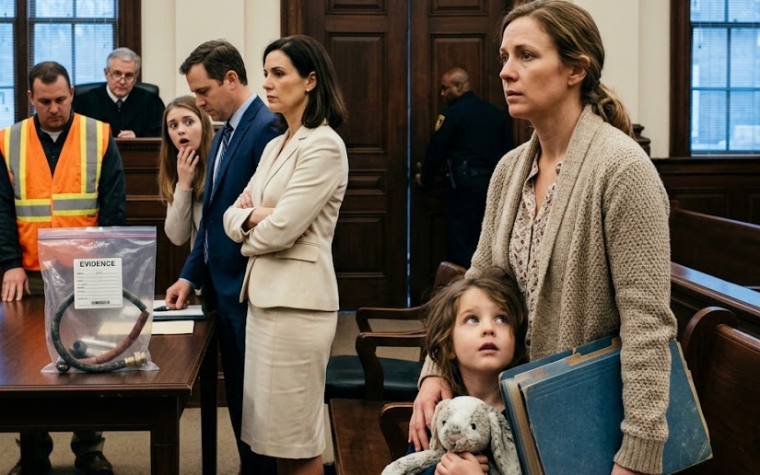
Everyone in our family knew it.”
“No,” I said.
“Everyone in our family knew you wanted it.”
She turned toward me.
“You always do this.
You stay quiet and then act superior because you have money.”
I watched my mother flinch.
Brielle pointed at me.
“Mom and Dad agreed that the house should stay in the family.”
“It was already protected for them,” Miriam said.
“Your document would have removed that protection.”
Brielle’s voice rose.
“I would have taken care of them.”
The judge looked at the trust excerpt.
“By transferring the property to yourself without preserving their beneficial interest?”
Brielle stopped.
Miriam then introduced the electronic evidence.
The alleged agreement was dated two years earlier, but its file metadata showed that it had been created eleven days before Brielle filed the lawsuit.
The author field contained Everett’s office username.
The document had been revised seven times over two evenings.
One revision changed the phrase temporary use of the property to permanent transfer of ownership.
Another removed a sentence requiring compensation to me.
The final version added language allowing Brielle to take immediate possession.
Everett stood abruptly.
“Metadata can be altered.”
Dalton grabbed his sleeve.
“Sit down.”
Everett pulled away.
“This is being twisted.
Laurel knew there was a family settlement.”
Judge Ramsey’s voice became colder.
“Mr.
Ashton, you will sit down.”
He obeyed.
Miriam produced one final set of pages obtained during discovery.
They were messages between Everett and a lender discussing the equity in my home.
Everett had written that title would soon be placed in Brielle’s name and that they intended to seek financing immediately after the court enforced the agreement.
The amount they hoped to borrow was large enough to place nearly the entire property at risk.
This had never been about giving Brielle a place to live.
They intended to use my home as collateral.
My mother covered her mouth.
“Brielle,” she whispered.
Brielle turned around.
“Everett handled the finances.”
He stared at her.
“You signed the complaint.”
“You told me the agreement would work.”
“And you gave me Laurel’s old signature page.”
The words left his mouth before Dalton could stop him.
No one moved.
Judge Ramsey looked toward the court reporter.
“Please mark that statement clearly.”
Brielle’s face drained of color.
Everett realized what he had said and leaned toward Dalton.
Dalton did not respond.
He was reading the examiner’s report with the expression of a man discovering that his clients had placed him inside a lie.