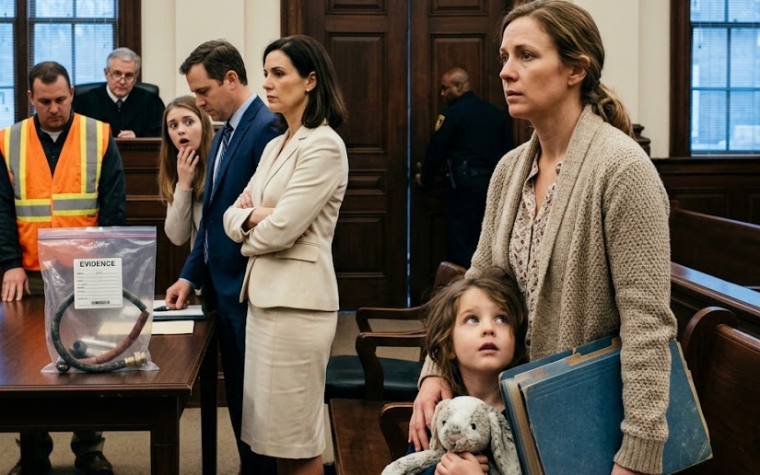
My mother read the first line twice.
Then she lowered the letter and stared at me across the kitchen counter.
My brother’s voice was still coming through the speakerphone.
He was somewhere near the resort pool, arguing that a private boat excursion should have been included in his package.
Behind him, music pulsed and people shouted over the sound of water.
Mom reached over and ended the call without saying goodbye.
“What is this?” she asked.
I set my folder on the counter.
“You know what it is.”
The letter gave her forty-eight hours to place the entire $684,300 into a protected escrow account, provide a complete accounting of every dollar already spent, and agree not to transfer or conceal any remaining funds.
If she refused, my lawyer would file suit seeking to invalidate the deed, freeze the proceeds, record a notice against the property, and pursue her personally for fraud, conversion, legal fees, and damages.
Copies of the letter had already gone to the title company, the escrow office, the buyer’s LLC, and the bank that received the wire.
Mom’s fingers tightened around the pages.
“You’re bluffing.”
“My lawyer isn’t.”
“I had power of attorney.”
“It ended when Grandma died.”
“The title company accepted it.”
“Because you told them nothing had changed.”
Her eyes flicked toward the folder.
That was the first moment I saw fear interrupt her certainty.
She recovered quickly.
My mother had always been skilled at turning panic into indignation.
“Maggie wanted this family taken care of,” she said.
“She would never have wanted one grandchild hoarding a valuable house while everyone else struggled.”
“She wrote a will.”
“People change their minds.”
“Then why didn’t you open probate?”
Mom folded the letter and slapped it against the counter.
“Because probate takes forever.
The house needed repairs.
Taxes were due.
I handled it.”
“You sold it eight months after she died.”
“I handled it.”
“You sent my brother on vacation.”
“He deserved something good.”
The words landed more cleanly than any confession could have.
I had spent most of my life watching my mother excuse him.
When he dropped out of college, she called him misunderstood.
When he borrowed money and never repaid it, she said he was rebuilding.
When I worked weekends, paid my own tuition, and learned to solve every crisis quietly, she called me capable.
Capable meant I received less because I could survive it.
My brother received more because he demanded it.
Maggie had seen that pattern long before I did.
When I was sixteen, she took me to the beach house after Mom used my savings to cover one of my brother’s debts.
Maggie stood with me on the cold deck, gripping the railing against the coastal wind.
“This place will be your safety net,” she said.
“A roof.
A door you can lock.
A piece of ground nobody can take from you.”
She repeated the promise when I graduated.
She repeated it after I moved to Portland.
And when her health began to fail, she put it in writing.
My mother knew that.
She also knew I had trusted her to handle Maggie’s paperwork because she had spent the final year of Maggie’s life driving her to appointments and paying bills under the power of attorney.