The buyer’s lawyer wanted the purchase price returned.
My lawyer wanted the deed declared void and the house restored to Maggie’s estate so it could pass under the will.
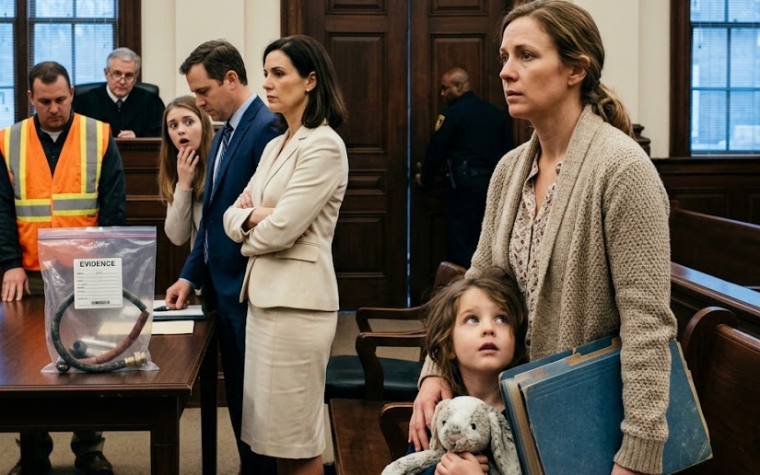
The judge asked Mom one question.
“Was Margaret Rowan alive when you signed this certification?”
Mom’s lawyer leaned toward her, but the question required an answer.
“No,” she whispered.
“Then why did you certify that she was?”
Mom looked toward me for the first time.
“I was trying to keep the family together.”
The judge’s expression did not change.
“By transferring estate property into your personal account?”
Mom had no answer.
The court ordered the remaining funds held.
It prohibited further transfers and authorized an expedited process to resolve title.
The judge also warned Mom that the written misrepresentation could have consequences beyond the civil case.
That warning finally broke through her performance.
Outside the courtroom, she grabbed my arm.
“You’re going to let them treat me like a criminal?”
I removed her hand.
“You told them Grandma was alive.”
“I did what I had to do.”
“For him.”
“For the family.”
“You keep using that word when you mean him.”
My brother stepped forward.
“Don’t blame me for everything.”
I looked at him.
“You mocked me while spending the money.”
His face reddened.
“I said one stupid thing.”
“You said it because you believed I couldn’t stop you.”
Neither of them denied it.
Settlement discussions began soon afterward.
The title insurer agreed to reimburse the buyer once the deed was canceled.
The buyer surrendered any claim to the house in exchange for receiving its purchase funds and documented expenses.
The title company reserved its right to pursue Mom for the false certification.
To restore the purchase money, the frozen proceeds were returned first.
Mom had to repay the amount she spent.
She liquidated the savings accounts, surrendered the new vehicle lease, and refinanced her own home.
My brother was required to return the unspent portion of the vacation transfer and sign a repayment agreement for the rest.
The resort would not refund several bookings, so the cost became his debt rather than my loss.
He complained that the payments would take years.
My lawyer reminded him that the beach house had taken Maggie decades to pay for.
The civil case ended with a stipulated judgment.
The fraudulent deed was canceled.
Title returned to Maggie’s estate, and after probate was completed, a new deed was recorded in my name.
Nora Lane.
No attorney-in-fact.
No family account.
No one else’s signature.
The county website updated on a rainy Tuesday morning, almost exactly four months after the first email had appeared in my inbox.
This time, when I read the ownership record, the office noise did not disappear.
I could hear keyboards, the espresso machine, and someone laughing near the windows.
My hands stayed steady.
Mom avoided harsher consequences by making restitution, cooperating with the title insurer, and admitting the false certification as part of the settlement.
But the financial damage was real.