Maggie wanted me to have a permanent place of security that could not be redirected to anyone else’s debts.
My mother’s lawyer requested a pause.
During that pause, the title company turned over additional emails.
Three weeks before the sale, the closing officer had asked Mom whether an estate had been opened for Maggie Rowan.
Mom replied that Maggie was alive but medically unavailable.
The next day, Mom sent a copy of Maggie’s identification and said her mother was resting at home.
The funeral had occurred eight months earlier.
Mom had attended it.
She had chosen the flowers.
She had stood beside the casket and accepted condolences.
There was no credible way to call her statement a mistake.
The case shifted after that.
Mom stopped insisting the sale was unquestionably legal.
She began arguing that I had suffered no real loss because money could compensate me.
She offered to give me whatever remained after family expenses.
The accounting showed what family expenses meant.
Beyond my brother’s $42,600 vacation, Mom had paid off $27,000 of his credit-card debt.
She had purchased new furniture for her house, prepaid a vehicle lease, and transferred money into two savings accounts she controlled.
More than $110,000 had already been spent or moved.
The bank restriction had preserved most of the proceeds, but not all of them.
My brother returned early from the resort after his payment cards stopped working.
He arrived at Mom’s house with expensive luggage, a tan, and a demand that she fix everything.
Instead, he found a subpoena requesting his messages with her about the sale.
He called me again.
“This is insane.
They want my phone.”
“They want records about the money.”
“There are private conversations.”
“Then your lawyer can object to anything unrelated.”
“You know what Mom is like.
She probably exaggerated things.”
“You repeated them.”
He tried to laugh.
“Come on, Nora.
I didn’t sign the deed.”
“No.
You only spent the proceeds.”
The messages arrived a week later as part of the document exchange.
Most were exactly what I expected: resort links, flight upgrades, complaints about prices.
One conversation was worse.
My brother had asked whether I might find out about the sale.
Mom replied that I rarely visited the county records website and was too busy working to notice until everything was finished.
He answered, “Then book it before she starts asking questions.”
Later, after the wire arrived, Mom wrote, “It’s done.
She can’t undo a recorded sale.”
My brother responded with a photograph of the resort villa.
Their confidence had depended on my silence.
They mistook calm for surrender because calm had protected them from consequences for years.
The court scheduled an early hearing to determine control of the remaining proceeds and the property while the case continued.
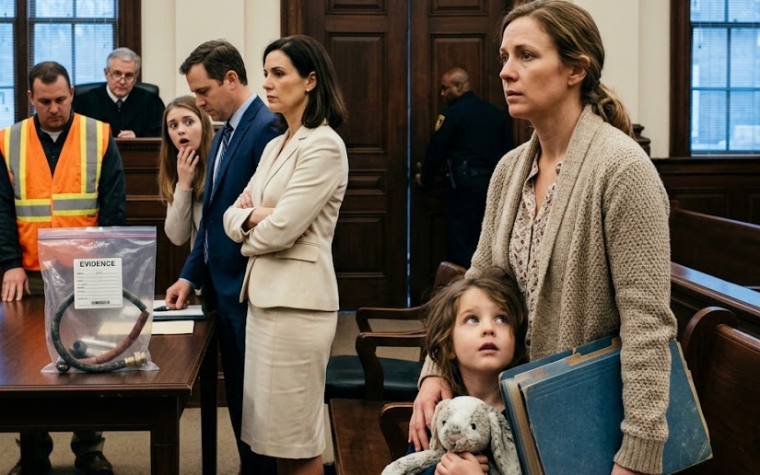
The courtroom was smaller than I expected.
Mom sat behind her lawyer wearing a dark suit and the wounded expression she usually reserved for family gatherings where she wanted sympathy before telling her version of events.
My brother sat behind her.
Neither looked at me.
The judge reviewed the power of attorney, Maggie’s death certificate, the deed, the certification Mom signed at closing, and the will.
Mom’s lawyer argued that the buyer deserved protection because it had purchased the property without knowing about the fraud.
The title company agreed that the buyer should be made whole through insurance, but it no longer defended Mom’s authority to sign.