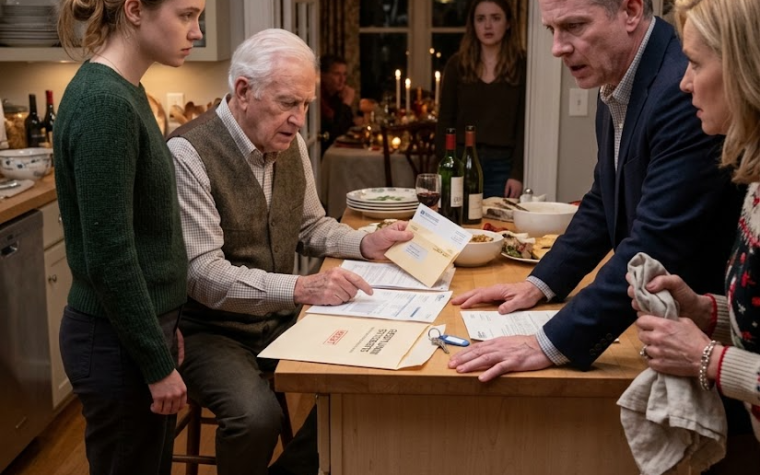
The lead attorney kept one hand on the open folder as Grant stared at the first page.
For the first time that evening, he looked less like the master of the room and more like a man trying to remember which lie he had told to which person.
“What is this?” he asked.
The attorney did not answer him.
She turned the folder toward the board members seated along the table.
It was an emergency notice suspending Grant’s financial authority over the foundation pending an independent investigation.
Beneath it was a court-approved order temporarily restricting transfers from three accounts connected to vendors he had personally authorized.
The first account had already been frozen.
The second was being reviewed.
The third belonged to Mercer Strategic Development.
Sloane’s glass stopped halfway to her mouth.
Grant recovered quickly.
Men like him often do.
Panic moved through his face, but arrogance reached his voice first.
“This is absurd,” he said.
“Mercer Strategic is a legitimate consultant.”
The attorney removed another page.
“Then perhaps Ms.
Mercer can describe the services her company provided.”
Every face at the table turned toward Sloane.
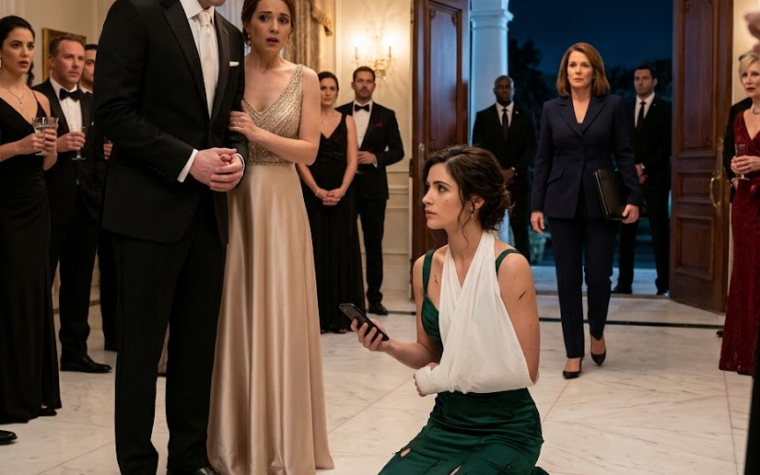
A moment earlier, she had been the woman in white silk who believed she had been publicly chosen.
Now she looked like someone who had walked onto a stage without knowing the script had changed.
She set down the wine.
“I advised Grant on donor development.”
“Which donors?” one board member asked.
Sloane glanced at Grant.
He answered for her.
“That information is confidential.”
The senator gave a dry laugh.
“Not from the board funding it.”
Grant’s mother leaned toward me.
“You should stop this before you destroy the foundation.”
I looked at her carefully.
For years, she had spoken to me in that same tone whenever Grant crossed a line.
She never asked him to stop crossing it.
She asked me to make the consequences disappear.
“I am trying to save it,” I said.
Grant pushed away from the table and stood.
“This foundation would not exist without me.”
That was the lie he had repeated so often that half the room had begun to believe it.
The foundation began in a hospital corridor after our daughter died.
I had been sitting on the floor because my legs no longer trusted me.
Grant was speaking to a doctor, but not about her.
He was trying to leave before reporters learned that the Whitakers had lost a child.
Three months later, I created a fund to help families facing the same medical costs and impossible choices we had faced.
I used money my father had left me.
I wrote the mission statement.
I met the first donors.
I sat with grieving parents long after the cameras left.
Grant arrived when the invitations became important.
He shook hands well.
He remembered titles.
He knew which table placement made a donor feel powerful.
Over time, he began speaking about the foundation as if it were another branch of his business.
I let him.
That was one of my mistakes.