But I had never transferred ownership of it to him.
I had never surrendered my position as founder and chair.
And buried in the bylaws Grant never bothered to read was a provision allowing me to suspend any officer whose conduct placed the foundation’s assets at immediate risk.
Grant looked around the table.
“Sit down,” he ordered me.
No one moved.
I remained standing.
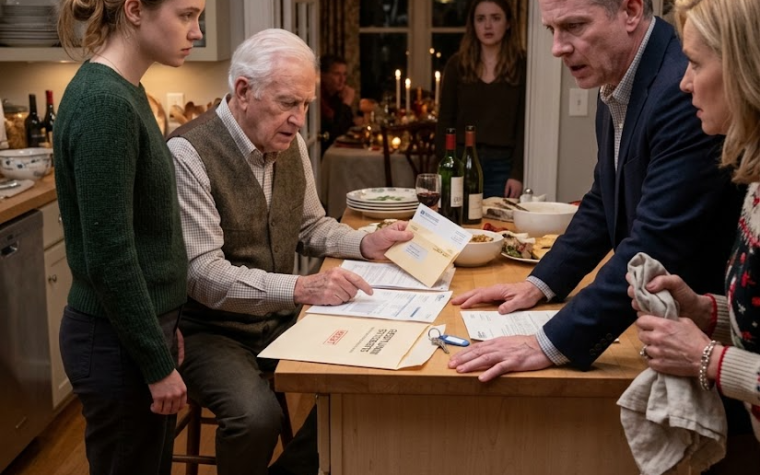
The attorney placed six invoices side by side.
Each came from Mercer Strategic Development.
Each described consulting work in vague language: donor outreach, strategic positioning, executive relationship management.
Together, they represented seven figures in foundation money.
The board member nearest the folder lifted one page.
“There are no reports attached.”
“There were verbal deliverables,” Grant said.
“What does that mean?” the bishop asked.
“It means the work was sensitive.”
The attorney opened a second folder.
“The invoices were submitted on the same dates as payments for a condominium lease, private travel, medical concierge services, and personal furnishings.”
Sloane’s face changed.
Not because she was surprised that Grant had paid for those things.
Because she had not known where the money came from.
She turned to him.
“You said those were company expenses.”
“They were.”
“Your company,” she said.
Grant’s jaw tightened.
“This is not the time.”
The room that had watched my humiliation in silence now watched theirs with remarkable attention.
I sat down again, not because Grant had told me to, but because I no longer needed to stand.
The evidence could carry its own weight.
The lead attorney passed a page to the senator.
It showed the registration record for Mercer Strategic Development.
The company had been created eleven months earlier.
Its mailing address matched the condominium where Grant had been spending the nights he claimed to be traveling.
Its sole member was Sloane Mercer.
Its authorized financial agent was Grant Whitaker.
Grant reached for the document.
The attorney moved it out of his reach.
“These are copies,” she said.
“The originals are secure.”
“You had no right to investigate me.”
“I had every right,” I said.
“You used my foundation.”
“Our foundation.”
“No, Grant.
You were its treasurer.
You were trusted with access.
That is not the same as ownership.”
The distinction struck him harder than an accusation.
Ownership was the language Grant understood.
He believed access became possession if he held it long enough.
That was why Sloane was wearing my mother’s earrings.
I looked at her.
“Take them off.”
Her hand rose instinctively to one diamond.
Grant stepped between us.