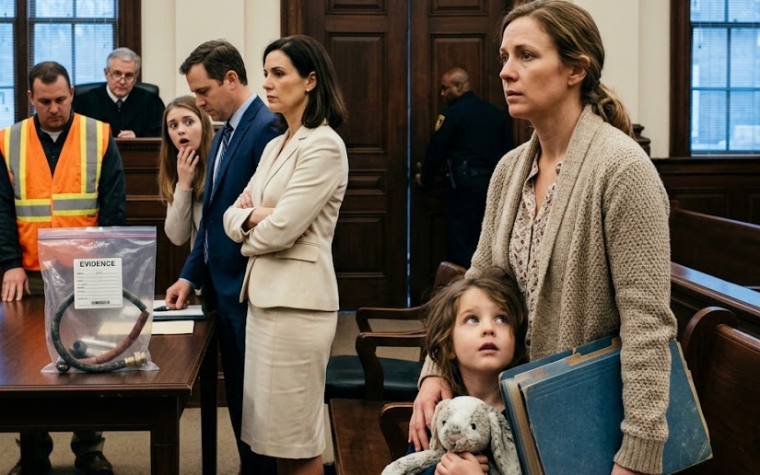
The clerk broke the seal on the exhibit folder and turned it toward the witness.
Tom went pale before the first page was even lifted.
I noticed because I had spent twelve years teaching myself to notice small things instead of reacting to large ones.
A tightening jaw.
A hand withdrawing from a table.
Eyes moving toward an exit that nobody intended to use.
My brother’s right hand disappeared beneath the edge of the defense table.
The witness, a senior supply specialist from his command, adjusted the microphone and looked at the documents.
The prosecutor asked one simple question.
Were these the inspection records submitted under Tom’s authority?
“Yes.”
Another page turned.
Were the inspections recorded as completed?
“Yes.”
And had all of them actually been completed when those records were signed?
The witness paused.
“No.”
The word was quiet enough that I heard my mother’s purse buckle click behind me when her hand tightened around it.
The prosecutor did not rush.
That was what made it worse for Tom.
Each question was small.
Each answer locked into the next one.
The witness explained that discrepancies had first surfaced during a routine review.
Equipment listed as inspected had not been where the paperwork said it was.
Dates did not match movement records.
Certain checks that required physical verification had been certified even though the personnel normally responsible for those checks had no record of performing them.
Tom’s attorney objected twice to the way questions were phrased.
The judge ruled calmly.
The testimony continued.
I kept my eyes on the front of the room.
Behind me sat two people who had once decided I was a liar because their son told a story more confidently than their daughter told the truth.
Now that same son was watching official records close around him.
The prosecutor introduced another set of documents.
Access records.
Submission times.
Corrections made after questions had already been raised.
Nothing dramatic happened when the pages appeared.
No one gasped.
No one shouted.
Real accountability rarely looks like television.
It sounds like dates being read slowly into a record.
It sounds like a witness saying, “That inspection did not occur on that day.”
It sounds like an attorney asking, “Then why does the form say it did?”
And someone answering, “I can’t tell you why he signed it.”
Tom stared at the table.
My father had stopped gripping the bench.
Now his hands lay flat against his knees.
I remembered those same hands holding the front door twelve years earlier while he told me, in my uniform, that he had raised me better than to lie.
For years I had imagined what I would say if I ever got the chance to make him understand.
Standing there, I realized I no longer needed a speech.
My life had become the answer.
The first witness stepped down.
A second witness was called, this one connected to the internal review that had uncovered the inconsistencies.
The prosecutor asked how the problem had been discovered.
The witness described a pattern, not one isolated typo.
Multiple entries.