Not an apology.
Not even a denial.
A redistribution of blame.
My father stared at him.
“Was it true?”
Tom’s attorney stepped closer and quietly told him the recess was not the time to discuss unrelated family matters.
Tom seized the escape immediately.
“I have a trial happening.”
Then he turned away.
My mother looked at me.
I could see the question she was afraid to ask.
I answered it anyway.
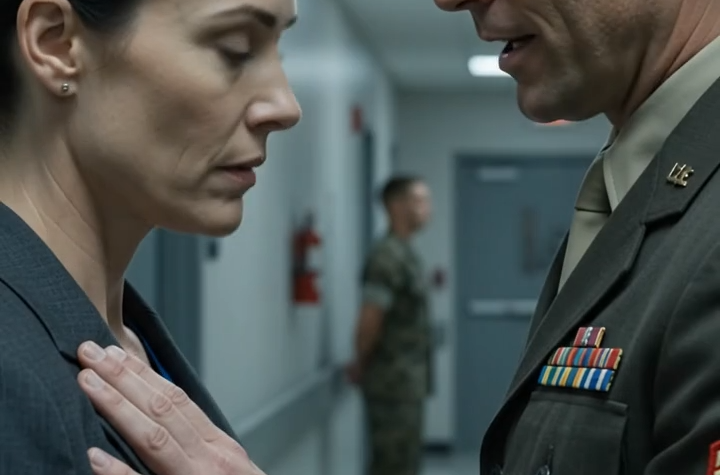
“I came home in uniform.”
She shut her eyes.
“I know.”
That hurt more than if she had claimed not to remember.
Because she did remember.
They had seen me.
They had simply chosen him.
The court reconvened before any of us could say more.
Tom returned to the defense table.
I returned to my place.
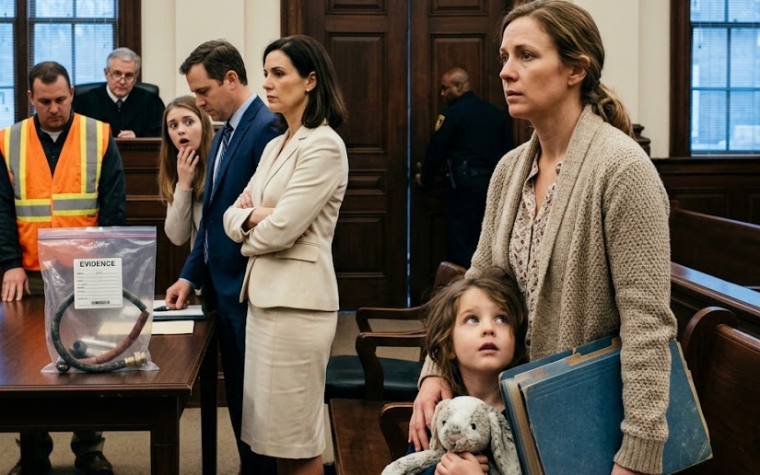
My parents sat behind him, but something had changed in the distance between their bodies.
My mother no longer leaned forward toward her son.
My father’s shoulders remained stiff.
The defense began attacking the reliability of the review.
Maybe inspections had occurred but had been documented late.
Maybe records were incomplete.
Maybe subordinates had failed to communicate.
Maybe the supply system had created confusion that was being placed on one person.
Some of those questions were reasonable.
Military systems are built from people, and people make mistakes.
But mistakes usually scatter.
These discrepancies pointed in one direction.
The prosecutor returned to the timing.
One record had been certified before the inspection team responsible for that equipment had even been available to conduct the check.
Another reflected an inspection during a period when the item had been logged somewhere else.
A later correction appeared only after auditors requested supporting information.
Tom’s attorney argued that none of that proved intent by itself.
The judge listened.
So did I.
Then came the piece Tom had reacted to when the folder first opened.
It was not a confession.
It was worse for him because it was ordinary.
A chain of internal messages showed that questions had been raised before the final certifications were submitted.
Tom had been warned that certain inspections were still outstanding.
He signed the documentation anyway.
When confronted during the review, he had offered shifting explanations about what he believed had already been completed and what he expected would be completed shortly afterward.
Under questioning, the investigator repeated one of Tom’s own explanations.
He had believed the remaining work would be finished.
The prosecutor let that sentence sit for a moment.
Then asked, “Was the document certifying what he expected to happen, or what had already happened?”
“What had already happened.”
The room went silent.
Tom looked over his shoulder.
Not at our parents.