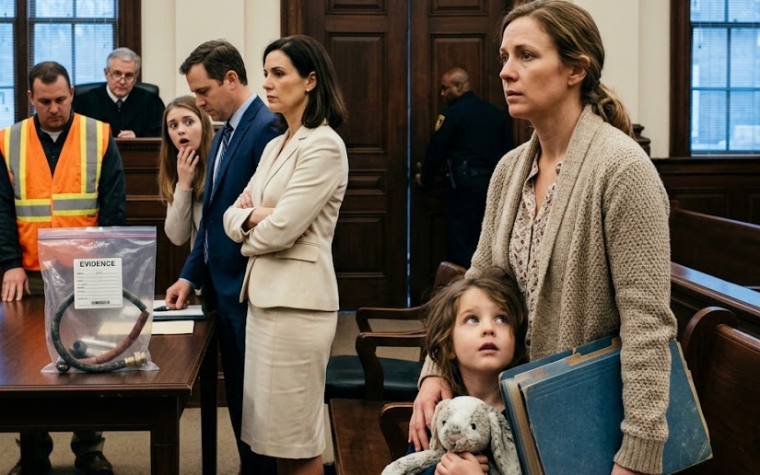
“I knew someone was coming.
I didn’t know what he would bring.”
That was true.
After Grandpa died, I had contacted the number on a business card he kept tucked inside an old folder in his study.
I had not broken into a safe or found some secret confession.
The card simply listed the name of a trustee and an office number.
Grandpa had once pointed to it while showing me where he kept tax records.
“If everybody starts shouting after I’m gone,” he had said, “call the quiet people.”
At the time, I thought it was another one of his dry jokes.
After Victoria filed for full control of everything, I called.
The person who answered would tell me almost nothing.
They confirmed my identity, asked about the probate hearing, and said a representative would attend if necessary.
That was all.
So when I told the judge to wait for the last person, I was taking a risk.
But Grandpa had taught me something Victoria never learned.
If someone is rushing you to sign, slow down.
If someone says everybody agrees, count the people.
And if someone says there are no more documents, find out who benefits from that being true.
The judge ordered the trustee’s supporting packet brought forward.
The man in the black suit produced a sealed folder from outside the courtroom through another staff member.
The documents were given first to the clerk, then shared with counsel.
Victoria’s attorney began flipping through them.
His confident expression disappeared page by page.
“What?” Victoria whispered.
He didn’t answer.
“What does it say?”
“Please stop speaking.”
She stared at him.
That was the first time anyone on her side had spoken to her like she wasn’t in charge.
The judge reviewed the records carefully.
He asked questions about dates, ownership, account registrations, and property interests.
Nothing dramatic happened for several minutes.
That made it worse.
The truth was not arriving like thunder.
It was arriving as paperwork.
One dated page at a time.
The trust records showed that Grandpa had reorganized significant portions of his holdings before his death.
Some property Victoria’s petition treated as freely transferable through probate was subject to instructions she had not disclosed because, according to her attorney, she had not provided them to him.
Victoria objected to that characterization immediately.
“I didn’t know about these.”
The judge looked at her.
“Then on what basis did you tell this court the assets were entirely available for transfer?”
“My father handled Grandpa’s financial paperwork.”
Every head near us seemed to turn at once.
My father closed his eyes.
Victoria’s attorney whispered something to her, but it was too late.
The judge looked toward Dad.
“Mr.
Hail.”
Dad stood.
“Were you involved in preparing the asset information provided to counsel?”
He hesitated.
“Yes.”
My mother stared at him.
“How involved?” the judge asked.
“I helped gather statements.”