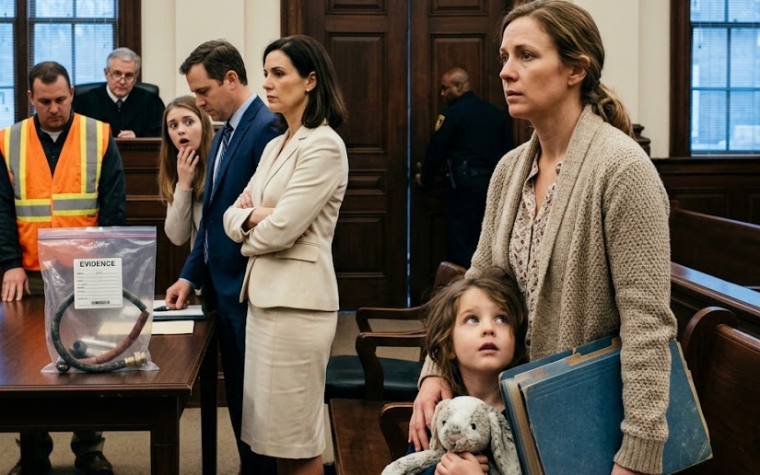
“Lower your voice.”
“You told me your father had never finalized it.”
Victoria heard that.
“So you knew too?”
Mom froze.
The silence between the three of them was brutal.
I stayed where I was.
I had spent most of my life being told I was the difficult one because I asked questions after everyone else wanted the conversation finished.
Now nobody wanted me to ask anything.
So I didn’t.
I opened the old folder I had brought from Grandpa’s study.
Inside were copies of mundane things—tax notes, contact cards, property maintenance receipts, handwritten reminders.
No secret fortune map.
No dramatic confession.
Just the habits of a man who documented everything.
The trustee’s representative approached me.
“You did the right thing by notifying the office about the hearing,” he said.
“Did Grandpa know this would happen?”
He considered the question.
“I can’t speak for what he predicted.”
That sounded like something Grandpa would have respected.
No guessing.
Only what the records supported.
When court resumed, Victoria’s attorney withdrew the request for immediate control rather than defend it further that day.
The judge scheduled additional proceedings and required formal disclosures.
The trust would be handled according to its own governing documents.
Probate assets would be identified accurately rather than assumed.
Financial records would be examined before anyone received the broad authority Victoria had demanded.
The separate paperwork served on my father remained separate, just as the judge had said.
But it was impossible to pretend it meant nothing.
My father had maintained financial records for Grandpa.
Questions about those records were now being asked outside the hearing.
The trustee had documentation he had withheld from Victoria’s filing.
And his own daughter had said in open court that he encouraged her to move quickly before I could interfere.
None of that made him guilty of a crime in the courtroom that day.
It did make secrecy much harder.
By the time we walked into the hallway, Victoria no longer looked like the woman who had entered in cream expecting a coronation.
She looked furious.
Mostly at Dad.
“You used me,” she said.
He looked around sharply.
“Not here.”
“You told me this was straightforward.”
“It should have been.”
There it was.
Not: I was wrong.
Not: I’m sorry.
It should have been.
Meaning the plan had failed, therefore something had gone wrong.
My mother began crying quietly.
Victoria turned on her.
“And you knew?”
“I knew there had been paperwork,” Mom said.
“Your father said it wasn’t important anymore.”
Victoria laughed once, bitter and stunned.
Then she looked at me.