Months later, I went back to Grandpa’s house while final inventories were being completed.
His workbench still smelled faintly of wood dust and machine oil.
A coffee mug sat upside down near the sink where he always left it to dry.
In his study, the empty space where I had found the trustee’s card looked ordinary.
That struck me harder than the courtroom had.
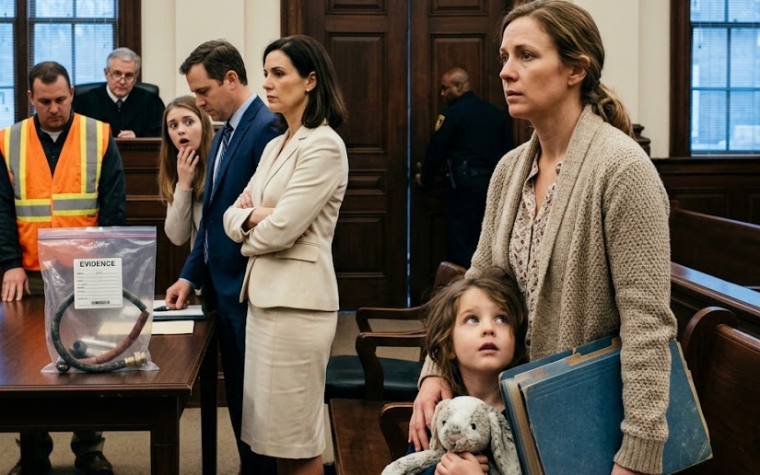
All the panic, the lawyers, the accusations, the motion for immediate authority—it had all grown around papers Grandpa had quietly put in order before any of us were ready to lose him.
I found an old receipt tucked into a drawer, folded twice.
On the back, in his handwriting, were three words.
Keep good records.
I laughed.
Then I cried for the first time since the hearing.
Not because I had won.
There had been no clean victory in watching my sister turn on our father or seeing my mother realize how much she had accepted without checking.
I cried because Grandpa was gone, and the closest thing I had left to his voice was the evidence of how carefully he had protected his choices.
Victoria had walked into court believing inheritance was about who could claim authority fastest.
My father believed information was power as long as he controlled it.
I had believed, for years, that being the family member who questioned things made me the problem.
Grandpa had left a different lesson.
Truth does not always need the loudest advocate.
Sometimes it needs a sealed envelope, a patient judge, records nobody bothered to request, and one person willing to say, before the pen touches the paper:
Wait until the full record arrives.